/
Talk
The Knife
February 28, 2007
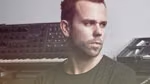
Olof Dreijer is one half of the Swedish sibling duo The Knife, soundcrafters extraordinaire. With ever increasing intensity and power, their music haunts unsuspecting listeners with notions of political awareness, oppressive authorities and queerness. This would be thoroughly disturbing if the music not also was the catchiest, most original and strangely appealing ever to be heard in the mainstream. Whether Olof was dressed as a mockingbird or not during our phone interview, I do not know.

Will the Knife ever put out a record without a hint of dark, moody roughness?
That’s a funny question! Well, I don’t think it’s very likely. It might happen, but I think you have to feel down in the dumps in order to make happy music. Or rather: I think it’s pretty common that you work your way out of a depression by making happy music, as a means of escape.
What does your musical background look like?
I actually began playing the saxophone in various jazz constellations, mostly playing free jazz and latin jazz. When I started working with the Knife it was a reaction to the loose structure of that kind of music. I wanted to approach pop music, you know by using building blocks like verses, refrains and such, utilizing computers and electronic instruments.
Since you are active within the field of electronic music, what’s your view on the development of music technology?
I don’t have any elaborate view on that. You take what’s at hand. I’ve never really felt technology-driven. I don’t write my own software, I don’t build any circuitry or anything like that. There’s no nostalgia on my part, no particular interest in old analog synths just for the sake of it. I just like to make new sounds. I guess that’s why the Elektron instruments work so well for me, they’re so simple to use.
When did you first hear about Elektron?
As far as I recall I heard about Elektron a few years ago from a friend who had a MD. Or was it my mother who knew the mom of an Elektron guy? No, the first one I had borrowed from a friend. I was too stingy to buy one at first. Now I’ve got one of my own. Today I have the Machinedrum, the Monomachine and a TM-1 interface. I’ve used the Machinedrum a few times when DJ:ing, which is a lot of fun. I use the MD instead of having a third turntable.
Do you have a favourite trick or technique that you could share with other Elektron users?
Well, I guess this is common knowledge, something everyone does when programming drum machines, but I always think in terms of notes and melodies when programming the Machinedrum, and make melodies with drum sounds. It’s very useful. In the past, when programming my 808 or 909, I had a hard time hearing the music coming out, it could only be heard in the monitor. This comes across much better with the MD.
You’re said to have a penchant for General MIDI. Is that correct?
Yeah. It’s a sort of technology limitation, a framework – again, you take what’s at hand. It is also in line with my political interests. From a democratic point of view I like the fact that General MIDI lets anyone in the world have these sounds, and lets everyone make music with them.
Do you see anything threatening with instruments or software loaded with set pieces; loops and pre-sets and patterns?
No, not as I see it. It’s only positive that people can use and be inspired by this. I know a lot of people who don’t work primarily with music, artists who want to make sounds for their video creations for instance, they find software like GarageBand very useful.
I saw your show at Sonar in 2006. A couple of rowdy, tanked-up British hooligans stood in the middle of the crowd. As soon as the show began, they froze, jaws dropped, and remained like that during the whole performance. They were completely shell-shocked! Is that the intended purpose with your music?
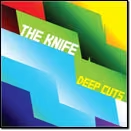
Yes. With Silent Shout, our latest record, the whole idea was to affect people emotionally. With the previous album, Deep Cuts, we had other ambitions. We wanted to raise political awareness in a mass audience.
Why this shift from the political to the emotional?
On Deep Cuts we tried to deliver a fairly straight forward political message, but afterwards we felt that it was a little bit too obvious. Nowadays, I don’t think you could form an opinion with music, but I think you can inspire new thoughts. That is important. We really haven’t changed though, we’re still political but in a more subtle way. It is only the means of expression that have changed. We’re also kind of political in the way we appear, how we work and how we distribute our stuff, I think.
After the Silent Shout tour you are almost as known for your visuals as for your music. Do you feel this visual approach to be a finished chapter?
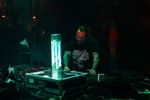
No, not at all. There is still much to explore. For instance, all the images on the Silent Shout tour were static, you couldn’t affect them. It would be interesting to experiment with interactive visuals that both we and the audience could alter in various ways. The imagery used in the Silent Shout live performances was quite brooding, almost occult at times. How come? That is because of the ideas of the graphic artist Andreas Nilsson. He is into Norwegian black metal and such things and put elements from that into the visuals. It is how he pictured the music and I agree with him. It was his show as much as ours really.
Be sure to check out the official The Knife homepage here.