/
Talk
Plaid
June 15, 2015
The expression "to make a mountain out of a spring" sounds pretty stupid. How can you possibly make a Brobdingnagian, billion ton mass of rock out of a source of water sprouting from the ground?
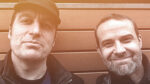
When you listen to the full-bodied, evocative and magical songs of Plaid, the literal notion all of a sudden seems a lot more plausible. Because making a mountain out of a spring is precisely what Ed and Andy – Plaid – habitually do. The music they make sounds epic. Often subtly, unobtrusively epic, but epic nonetheless. And it’s stitched together using nothing but little wobbly electronic waveforms. A spring that never dries up.
Where does Plaid - the name or the band - come from?
(Andy) It was, initially, just a kind of word that we liked. A sort of warm word. There was not too much thought behind it. As it transpired, as it always does, there are some good reasons for it. In Welsh, Plaid means party, so we often say that's the reason for it. And from a design point of view, it's a really nice word to play around with. There's a symmetry in the shape of the word. We've been working under this name for 25 years, and people still dont know how to pronounce it. It always gives us something to talk about. At the time when we chose the name, we were both working in offices. In American movies, when the office worker is at home and it's sort of off-time, plaid was a very common fabric, the staple for the off-duty office worker, so that was the thought behind the word. And the design is, kind of, crossing pathways and mixing styles, and we incorporated that into what it means now. It's just worked out well in the long run.
When and where did you first hear about Elektron?
(Andy) We are very good friends with John Tejada (
), and he's an early adopter of Elektron machines. So, I would say, through a friend would be the first connection to your amazing kit.
How does the Analog Rytm contribute to your sound?
(Andy) Well, we're fairly new users of the machine. We moved away from outboard gear about ten or fifteen years ago, and became obsessed with doing everything in the box. So it has been a very refreshing period for us, you know, going back to hardware. It's certainly something that's going to be a big influence on our writing in the future. We'll certainly be using the Analog Rytm heavily for live performance and for composition.
You composed a real earworm with the infectiously catchy boss stage music for Little Big Planet. Isn't that just about the best forum for reaching out to people with your music? The kids will hear that song, over and over again, until they've beaten the bad guy!
(Ed) Yeah, I suppose it's the ideal tool for brainwashing! That doesen't necessarily mean they'll go out and buy something afterwards, but I'm glad that some do. We should do more boss levels, basically, that's the way forward!
When I revisit the games I beat as a child, the music is the main thing I want to reexperience.
(Ed) We used to play a lot of Mario Brothers and all the music of the Nintendo stuff is always incredibly catchy. I can still hum it all, now!
As a carrier of a medium, video game music is as influential as pop music was to analog radio when it was first introduced.
(Ed) That's true. We haven't done that much video game music yet, though. We had some pre-written tracks some years ago on a couple of games, but Little Big Planet was the first time that we actually composed something for a game. We're really grateful. It's a game the both of us really like and that we've played a little bit. We're happy about that, but we haven't really thought about the implications of repeated listening and so on.
You also did sort of interactive music for the great game Chime. Do you believe in the development of wholly artificial generative music? Has the day ended for passively litening to music?
(Ed) I can see the scientific pleasure, and the technical pleasure, in generative music, in that you're learning, you're trying to teach a computer how to make music, which is a great technical aim. But from an aesthetic point of view, I'm not sure I want to hear generative music so much. I think I like to hear the human input. You can argue that generative music ultimately will have the human input of the programmer, but I think we're quite a long way from hearing great music that's also generative. You could probably write a program that would make the kind of music that we make fairly easily! But there would be something missing, I'm sure. Some element of randomness, some kind of chaotic element that only we can come up with at the moment. I don't think AI is clever enough yet, and we both get so much pleasure out of writing. To just have a machine do it seems a bit sad in some ways. We have generative elements in what we do, we always have, but it's pretty basic generative stuff. Just randomization of various parameters. We still love sticking it all together ourselves. That's one of the big pleasures, and we don't want to lose that.
We've had this promise of AI and what it can do for a long time now. With music, so far, you can't disregard the importance of the artist. The human touch. Speaking of which, when you start sculpting a sound on the Analog Four, do you manage to quickly reach what you had in mind, or do you lose track of time, tweaking?
(Ed) I think we both tend to lose a lot of time tweaking. We spend hours refining sound, sometimes. Unless we have a deadline, in which case everything seems to move a little bit faster. Actually, to be honest, even when we have a deadline we spend too much time. Again, that's one of the pleasures! To have these sort of infinite tweaking possibilities. I think, with something like the Analog Four, and obviously a lot of software based synths, you've got so many options, and you've got so many possibilities, that even if you arrive at something that sounds similar to what you can imagine, you'll still carry on, because there's something further you can do. You know, ultimately, if you want a hi-hat type sound, you'll get a hi-hat type sound fairly quickly. Speaking of layering, especially with the Analog Rytm, you've got the option of bringing a sample in there as well, and obviously the sample can be literally anything, and the sound source of it can be anything, so that's another whole stage in sound design. We do waste a lot of time on that. I think it would be nice to be quick and efficient, but I'm not sure making music should be about efficiency.
To be really efficient with a synthesizer, I guess, you have to have an extremely clear idea of what you're going for, before you even start tweaking? Ideally, you want to be able to do Fourier transform in your mind, real-time. Is that something you are able to do? The results you get are, as far as I can appreciate, near perfect. Hearing your songs, I'd guess you had a very clear view of what sounds you were going for.
(Ed) I think that's true, sometimes. But I think we both still struggle in manifesting what's in our imaginations. With a synthesizer, there's still the technical block and there's still a lack of - I wouldn't say lack of technical knowledge - but there's still a lack of the tool, sometimes, so you might imagine this kind of crazy spectral whatever, and it's just incredibly hard to make. You know, the sounds of your dreams. I think with more regular, simple sounds, I think we're both fairly proficient because we've been doing it, you know, over 20 years now, we've been using synthesizers. We know our way around most types of synthesis, and samplers and things like that. I think we kind of know what's possible. I think the real challenge is when you can imagine a sound, and you have no idea how to approach it, say with additive synthesis or something like that, you literally could create anything, out of individual partials. I think with subtractive synthesis, it's relatively straightforward as long as you know how the oscillators are interacting. Yeah, I'd say sometimes we go into it knowing what we want, and we can make it. Sometimes we just go in and mess around, because I think you can get results when you're going in blind. You definitely get results. Especially when you first got a new toy, a new synth, and you're learning how to play. You'll discover all these things, and, you know, we're still discovering things about the Analog Rytm, certain ways of routing things. We get some surprising results. We're in love with the Analog Rytm. I'm sure we'll get some more Elektron gear.
One thing I've wondered for a long time is this IDM stamp that people often stick on some artists. Intelligent Dance Music - Are the people who make it highly intelligent? Do you get more intelligent by listening to it?
(Andy) I don't know. It's not really a term that we ever particularly liked. I mean, we're nubbed in with that. The Warp Records and the compilation albums that came out in the 90's seem to be at the forefront of what journalists ended up labeling IDM. I mean, it's always like a genre label, in terms of when a new kind of genre arrives, it's not like all of the artists get together and kind of collude to create something in a particular style. It tends to be something that comes from journalists afterwards, as a way of describing, loosely, music that kind of falls into the same category. Obviously, that's important, because there's so much music coming out, and consumers can't possibly have time to listen to everything. So, it's a good thing that the journalists do that, but as far as we're concerned, although some of the music we write could be deemed IDM, we wouldn't want to be having to work within the confines of that genre all the time with everything we do. I guess you need to be able to have some intelligence to be able to dance, but it's not really a crucial element, so it's kind of a daft label. I guess it talks more about the complexity of rhythmics and perhaps slighty more advanced melodic progressions and things like that.
I personally look like a lot of things when I dance. Intelligent is not one of them.
(Andy) Ha ha, exactly. I certainly don't feel like I'm exuding intelligence when I dance, either!
What is more important to you, rhythm or melody?
(Andy) I think it's kind of the same thing. There's always melodic components to most percussive sounds, there's a tonality. There's always a rhythmic component to melody. It would be difficult to say which was more important. You know, if I had to call one, perhaps rhythm, but, you know, they're kind of the same thing really. Both are required for music.
In the evolution of planet Earth, which came first, do you think?
(Andy) I would say rhythm, from what we understand, from what anthropologists tell us. Rhythm was the first, but there would always have been a tonality in those rhythms, so it's hard to tell.
Do you look towards and draw inspiration from any particular musical tradition, outside of the western classical framework?
(Andy) We've been lucky enough to work with a Gamelan group based here in London, on a couple of occasions. That was a great time, i think, coming to that with very little knowledge of that music. The scales were very unfamiliar. It took probably two weeks to a month of working with those scales to really start to hear the beauty of them. Initially, they sound very dissonant. It's amazing how quickly the brain adapts to different tunings. That was quite exciting. And I'm sure that we have incorporated that to some degree in our writing. We will tune things micro-tonally, and not always sort of be bang-on 440 tuning, so that has had some influence.
Western music often equates major key with happiness and carefree love and things like that, while if you listen to music from Iran or Turkey, for instance, you'd think the love songs were more like songs of woe. You'd think it has the opposite meaning because of the impression of minor key content, which is actually microtonal expression. Then again, if I turn off the TV and the radio and listen to old Swedish folk music instead, I hear the old love songs are also often in minor key. It's like there has been a pole reversal of meaning in music, between then and now, between East and West.
(Andy) It's really a matter of exposure and education, really, and association. You know, Chinese opera or something like that can be quite offensive, if you're not so familiar with the music and the tonal system. But, like I said of our experience of working with the Gamelan, they have a couple of tuning systems, five-note and seven-note systems, and it's incredible how quickly the brain adapts to these new tonal scales. So it's always been a dream to use more micro-tonal tuning to write, but you need some exposure for the brain to start to make it appealing. With all these things it's kind of slow progress. You can't just come up with one completely radical system because nobody would appreciate it, it would just sound completely wrong.
Everything is connected, you know. I think people are definitely more open to other cultures' music now, that's a really positive thing. We're very lucky to be in this time when we have access to all of these different musics.
Your music is not cool and clinical, rather warm and inviting, which is still pretty unusual for electronic music. What's your secret? How do you make a metric, linear and sequentially oriented machine sound... alive?
(Andy) I don't know, I heard Edward talking about the time that we spend tweaking sounds and developing sounds and, to some extent, bringing kind of generative elements in. You know, we would always kind of use generative elements almost just like session players. Like you might have a session player in and jam around this key, and then you would take edits of what they produced and string it together in a way that seems kind of right to you. I guess it's a matter of just spending a lot of time trying to get every beat right. Sometimes we're able to do that, and sometimes, not so much!
Do the two of you have clear-cut roles when you make music, like, one always does percussion and the other melodies?
(Ed) No, we both tend to do everything. One of the attractions with electronic music is that you kind of can do everything. We don't really have a preference. I think we both enjoy all aspects.
Who's Whithnail, and who is I?
(Ed) Ha ha. Withnail & I. Which one would you be, Andy? (Andy) I would be Withnail. (Ed) I'm the more sober one, whatever that is, I. I haven't seen the film for quite some time now!
Was it scary or soothing working with Björk on the Not For Threes album?
(Ed) It's probably a combination, when you work with someone who's very famous. There is a slightly scared feeling, with this celebrity person, but I think with someone like her, she's so devoted to what she does, and she's such a professional and gifted person that that kind of makes you soothe. When she sings, it's just correct. There's no mistakes. In that sense, it's really smooth. She's a wonderful person, so full of creativity.
20 years ago, with Black Dog Productions, you did outlandish, obscure and obstinately danceable music. You still do! Only perhaps not as obscure. In what way is Plaid different today, regarding instrumentation, attitude and general outlook on life and music?
(Ed) I think certainly, when we started out with Black Dog, we'd be more introspective and more, in some ways, serious, but there's also always been a little playful element to what we do. In terms of our music, our first releases were fairly naïve. That's not to say that they were bad. In fact, in some ways, it makes them better, because it's kind of got the benefits of innocence, but we've certainly learned a lot about electronic music, not necessarily music in general, putting tracks together, and production. We can produce a better track now, for sure. We knew very little when we first started. We didn't know about compression. But we still kind of just do what we do. It hasn't radically changed. Our tastes have changed, and evolved, as we've absorbed more music, but you can still hear a lot of the same elements, which I think is just probably down to our personalities. It's the deep things that we are attracted to, sonically, for some reason. Bells. FM. Certain things that we keep going back to, and we have no choice but to go back to because we love them. That's still the same, really. Much to the disappointment of some people! We feel lucky to be able to do it after 20 years. A lot of people don't necessarily have that kind of time in music. Certainly not professionally.
The stabs opening the song Hawkmoth sounds as if the keys player sits on a swing, facing you, rocking back and forth with an anything but harmonic oscillation. The combined peristaltic jerkiness and melodic consistency feels both unnatural and tangible at the same time. This is electronic magic *par excellence*. Do you believe in magic?
(Ed) Yeah, I think we both do. It's our sense of what magic is that's changed. Twenty years ago, it was much more literal. The idea of being psychic, and things like that. I think we've got a much more nuanced view of it now. Magic is really just the things that you can't describe very well. That's kind of happening all the time, and you can either look at it, or not. In terms of musical magic, there is definitely something in music that is very hard to generalize and to describe, where, for some reason, something is interesting or it isn't interesting. I suppose it's a kind of composite effect and you can't put your finger on exactly what it is. It can be quite complex. And that's, you know, the kind of magical side of music. I think musicologists try to work out what it is that we like about music, but there is no unified theory of why anyone likes music, really. There are lots of sort of general theories, but I think it's such a unique form because it is formless. Music is the most significant magic for me.
What's your take on Psychic TV, TG and Magick in general?
(Ed) When we first were in Black Dog, we definitely both had an interest in paganism, and that kind of started magic a little bit. We were never fully immersed in it. Ken was kind of obsessed with that stuff. I find it interesting, but at a certain point I think you find a lot of it is kind of just theatre. It's to do with glamor, and it's to do with how you project yourself. That's quite interesting, you know, but I think we both felt that the real magic was in music, was actually in getting there writing music, and the effect of music, and everything else was just a bit kind of glamor and just to do with a show, you know, a kind of show of personality. Which is fair enough, I think it's fun, but I think some people took it too seriously. I think Throbbing Gristle had some amazing results, and they achieved this whole notion of a lifestyle, in a way, they made some really interesting advances in music and psychology, and other things. I think it's all very valid, and really interesting. But not something we're so involved with anymore. I think music has a strong implication of magic built into it, and you can either absorb it, or not. I think that's what music is, in itself. I try not to associate too many other things with it. The music is everything.
Reachy Prints of last year has some of the most lush, irresistible sounds and melodies I have ever heard. The collage of styles of music and techniques you use is nigh impossible to dissect or pin down. It's just that seamless. Is it retro? Is it future? Is it a regular or complex polyhedron of dimensionalities? It feels familiar and brand new, all at the same time. What was the most important influence or source of inspiration for you when you made that album?
(Ed) We both listen to different types of music. Music itself is obviously a big influence on what we do. When you make something, you don't necessarily think back to what it was that made that or what inspired that, but I personally was listening to some bits of contemporary classical music which I know nothing about, I'm sort of still learning, and there's so much color in that. A lot of harmonic sensibilities that are really interesting. But I'm completely ignorant of that world, so I just started to hear a few modern composers like Tom Adès who's very intersting because he uses very harmonic stuff still but tries to introduce a little bit of, there's a little bit of serialism in there, and a little bit of discordancy, but mostly it's ultra harmonic stuff. The things he does with harmony is really interesting.
(Andy) When you're writing, you're looking for those moments when the music starts to make you feel something, you know, we use the expression goosebumps, which most people can relate to. That sort of feeling of excitement. Generally, when you hit those spots, that's when you feel like you're on to something. And you just kind of hope that everybody else feels the same way. But actually trying to pin down what it is about it, if it's combinations of melody or rhythm or whatever that gives you those feelings, is incredibly difficult, and it's very, very subtle. I think it's a combination of your life experiences and memories and it's a real hodge-podge of stuff. It's very difficult to say, specifically. You know, we certainly don't try and emulate anybody else, as it were, but we also admire other composers, and also producers. I think what we're always striving for is to produce our music to a high standard, so that sort of technical stuff comes in a bit, and always try to get fuller-sounding mixes. It sounds kind of boring, I guess, but it excites us. I think some people tend to try to follow trends in music much more than we do, in terms of trying to write within the framework of these genres we were talking about earlier. For us, that always seems like the dishonest way to write, so we really rely on our own emotions and experiences, and just try and do something that we really like, and then just hope that other people will, as well. Even if it doesn't necessarily fit with what everybody else is doing.
Interview by Daniel Sterner