/
Talk
AUX 88
December 16, 2015
The distinctive sound of Techno Bass has its origins in Motor City, USA. We managed to snatch an hour off of one of the progenitors of the genre, Tommy Hamilton of AUX 88. When they started out, techno was a strictly underground business. Today, it is an integral part of the mainstream, with prestigious awards (for which AUX 88 has been nominated several times), prime radio airtime and - perhaps the most significant proof of popular recognition - even heard scoring major automobile brand TV-commercials.

Make no mistake, though. AUX 88 have not let this acclaim and mass hype go to their heads. Rooted in the quest for originality, and having once conjured up a unique, primordial form of techno by blending the best elements of NY Electro and Miami Bass, AUX 88 still thrives in the underground – in spirit, if not in outreach. The beats of Tommy *Tom Tom* Hamilton won’t leave you, once they’ve entered your mind.
What does the name AUX 88 mean?
Well, we kind of got together in '88, and the AUX part came from the aux delivery on the back of a stereo system, where you have the auxillary plugs. We always like to play with letter and numbers. So that's how we became AUX 88. Back in the day, before we really got a release out, we used to be called RX-7, just to give you an idea of the letter and numbers that we like to play with.
RX-7, isn't that a car model? A Mazda? Was it based on that?
Yes, correct! It actually was. We just liked the way it sounded. We used it when we were doing live shows, even before we had record deals.
Wasn't Mazda one of the manufacturers that gave the Detroit car industry a hard time back in the Eigthies?
Yeah, that was Mazda. I think, today, the only company that really shows some love for Detroit and the techno stuff is Ford.
The RX had a cool kind of rotary engine, didn't it? A Wankel engine?
Yeah, I believe so.
I'm actually going to digress some more on cars, here. How did the auto industry legacy of Detroit impact on you?
We weren't really impacted by it. I mean, music is music. Well, no, I take that back, because I can say, with Ford actually giving us, and techno music, some attention, that kind of put the techno underground of Detroit in more of a mainstream view. We had a Ford commercial which Juan Atkins did, and it was a really huge success. It was for their *Focus* model. When Ford first came out with that car, a little mini car -
My sister drives one of those!
Yeah. A lot of college kids would gravitate towards that car, because it was small and affordable. So I could say the industry had a really big impact on our music and what we do. A lot of people who weren't familiar with underground techno really gravitated toward it when that commercial came out.
What's your personal all-time favorite car?
It would have to be the Bentley.
The British, hand-made car? Do you own one of those?
No I don’t (laughs)! Not yet! You can't just walk into a showroom and buy it. You have to order it, and they make it for you.
You have to wait for it.
Yeah, which I think is awesome!
I recently saw the trailer for the documentary about your band - AUX88: Portrait of an Electronic Band - and there's a sleek Dodge Charger that flashes by in it - is that your car?
Yes it is. I love that car! I've had that car for two years now. I did some alterations on it, I tinted the windows, and I actually changed my grill to a Bentley grill!
Looks spacious, too. Room enough for all of AUX 88 in there?
Yes, all of us were in that car, just before.
You own another sleek, black thing. An Analog Four, right?
I do, yes. Beautiful machine. Beautiful.
If the Analog Four were a car, what make and model would it be?
You know, it's funny you say that. That would be my Dodge Charger, actually!
All right!
Because it's supercharged, and that's my go-to machine. Any time I need something that you don't normally hear, I go to the Analog Four. That would be my Dodge Charger, for real.
In what way do you feel Detroit has become a landmark for techno music?
Well, it was originally thought up from here! In Detroit, we have the edge on making music because of all the factories here. Any given day, you can walk down the street, downtown, or any of the areas where the factories are, and you can actually hear beat, rhythms, sounds from the factories and the cars. You can be driving, and when you pull up next to a clocker, and you know, the car goes *du-du-du-du-dudu-du-du-du-du*, we hear so many rhythms!
I remember one time, back early on when we started doing music, I took a recorder out. It was a cassette recorder, back then, with a microphone. I just recorded all these different sounds, man, and I was just amazed by the different rhythms and sounds you could pick up, just from everyday life, just by being outside.
I'd say Detroit has the edge, because it appears we can think up music quicker than most people, because of that. Subliminally, you're hearing rhythms that you heard only on that day, and when you start to produce, it comes across in your music. You're not even really thinking about it. It's just amazing.
What makes Detroit stand out from, for example, Düsseldorf?
I think some of the talent that we have here, that came out of Detroit. We have - we call them the big three - Juan Atkins, Derrick May and Kevin Saunderson. You know, these guys have made milestone achievements through music. When you think about music, you think about Detroit.
Also, we can go back to early on. We can go back to Motown. I mean, you think about R&B, you think about Detroit. You think about the stuff that came out of Motown. You know, Studio Ramone, Stevie Wonder, The Supremes, you know? Michael Jackson - the list just goes on. So when you think about music, you have to think about Detroit!
What about the AUX 88 contribution to the public image of Detroit? What is your footprint?
My view of us is that we really started doing the Techno Bass, which is what we call it. Some people call it Electro, but we call it Techno Bass because we use the elements of techno, and Miami Bass, then fuse the two together. That's how we came up with our style.
We started doing it, because there was a time-frame when nobody was really doing any new music, you know, Modifier 101 geared towards techno. There was a really big gap with no new music. That's why we started doing it.
Like my partner Keith, he was a DJ, no new music to spin. I was a dancer, and man, I'm tired of dancing off to old records, so we just started making new music, but with a flavor of the style that we were used to and we loved, when we used to go out and party.
We want to put Detroit back on the map with something fresh. Another repeat, like they did with Motown, and then, later on with techno. So, here we come with the Techno Bass. We want to revive that music thing again, that we grew up to and we love. That's the reason we started doing it.
Do you remember the pivotal moment when you decided to go for it and be a full-time musician?
The pivotal moment was when we signed our first record deal, which was with 430 West. You know, we're just humble guys, and just for somebody to say "hey, we want to sign you guys and put your music out" - it is something everybody dreams of. When you're a musician, you're in the basement making your music, everybody dreams of having a record deal. That's the ultimate goal. To actually achieve that is really overwhelming, like "wow, is this really happening?" so that was really a pivotal moment. We can really do this.
Then, after we did our first album, which was Bass Magnetic, the strong response we got from the record stores made an impact. And I can still remember the first time I heard one of the singles played on the radio. Man, it was just mad. Unbelievable! It's a feeling that I can't really describe. Chills all over your body. It's surreal!
Awesome. Do you feel techno is a truly global and transcendent phenomenon, or are the local varieties as alien to one another as cats and dogs?
Excellent question - there's a two-fold to that. When you really think about underground, techno always stands out. You have so many variations of techno, and the reason why I feel that you do is because, you know, you hear music, and when you start to do music, you're emulating something that you heard. Sometimes you can't be a carbon copy of that particular sound, or that style, so that's when you start to get variations of techno.
Years ago, when you had a lot of underground records coming out, I think the market got flooded with a bunch of variations of techno. Not to discriminate or down any other style, I'm just saying that you have so many different variations of techno.
That's why people started labelling them with different names. Back in the day we used to have techno-hop, which was really pretty much like electro and techno bass. Then you came out with jungle, then stuff which is a variation of jungle, with jungle being very much a variation of techno, which had more rhythm, a more rhythmic version of techno. You have all these variations, and then people come up with names for all these different styles.
Right now, do you feel that the scene is in an experimental phase, where you have a lot of different variations, or is it a period of time where everything starts to converge toward the mainstream?
Well, there we go again with the twofold answer: Another variation of techno, to me, is EDM, which is more mainstream. With EDM, techno is now starting to become more mainstream. You're hearing it in commercials, more concerts now, a category of Grammies, the music awards, now for EDM, so there you have your mainstream. But I think there are variations of techno which are still a level underground. The true, stripped-down sound for the underground.
What would be your dream soundtrack to make, what film or genre?
If they re-did *Blade Runner*, I would love to do that soundtrack. That would be my dream. It's so dark, and it would fit really well with techno music. Oh, I would love to get my hands on that (laughs)!
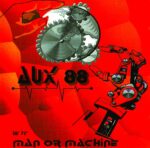
From your early releases, and throughout, you have this theme of the ever more intimate relationship between man and machine. What are your thoughts on the state of this relationship today?
That whole concept with the man and machine, we came up with the idea when we were in the studio, we kind of lock ourselves in the studio, and it's just us and the machines. Sometimes, people make records, with all the triggering and all that sort of stuff. Our concept was more kind of like: Is it the man really producing the music, or is it actually the machine? You know, you have a lot of electronic music and musicians where it is questionable.
Is it really the machines making the music or is it really the person behind the machine? A lot of musicians are trying to make electronic music, and you still have that question. Is it the machine or is it the man? When you listen to music you come across, it's kind of hard to tell, now, which is which, because you can do so much. When we started, computers weren't really a part of making music (laughs)! Now, you know, you can't really make music without a computer.
Isn't that part of the love and fascination, though? The fact that you actually exist somewhere inbetween the machine calling the shots, and you calling the shots? Isn't that part of what makes it interesting?
Yeah. And sometimes, you know, the machine could call the shots. The reason I say that is because when you sit down with the machine, a synthesizer, sometimes you don't know what you're going to come up with. You may hear a sound when you're producing one track, then you hear another sound, then the next thing you know, you're producing another song. You had know idea that you were going to produce this particular style of song!
Have you tried the Overbridge technology that Elektron recently put out?
I have! The beta version, actually. I love it that I can actually incorporate this analog gear with my computer, when I'm working with my software sequencer. I can pull that up and just streamline the sound. It's awesome. I use MPC a lot to produce, you know, do my pre-production, and now I'm able to fuse Analog Four in with my production with the MPC. It's just a wonderful thing. I think that's one of the best things ever. You've got your analog world, and you've got your digital world, so you've got the best of both worlds.
Yeah. It is something that is going to lead to a very interesting future, I think, as a whole. Not just regarding electronic music. The fact that you can have that tactile connection between the analog and the digital world.
Yes, I think it's awesome. And I've got to say, when we started making music, we came from the analog world. You know (laughs), tracking with the SH-101, you have to record the part, then make the next part. You've got to scrap that first sound that you've made. You're crying not to - it was crazy back then. Now, you have the ability to save sounds, which is just something that is totally different. With the Analog Four, man, you're already starting out with your sound, and the ability to save it and back it up - you can't beat it.
Do you still keep notebooks full of parameter settings for some of your old gear?
You have to. The thing about old analog gear, you can put the knobs back exactly the way they were, and it sounds totally different (laughs)!
So there's that constant element of surprise?
It is. Sometimes it sounds better, sometimes it sounds worse. Maybe I wrote something down wrong, you know?
If you put man and old analog machine on trial, it's going to be real hard to find out who messed up!
Yeah!
What gear wouldn't you want to be without, live, and in the studio?
Live, I would have to say, Native Instruments Maschine. In the studio, my Analog Four is a must, and my MPC. I think with my Analog Four and my MPC I can rule the world (laughs)!
What aspect of the Analog Four do you see as the most musically rewarding? Is it the unique tone of it or its extensive control possibilities?
I think the sequencing control possibilities, because of the way you're able to tweak the sounds, but also the sounds you can create: I'm a big fan of creating sounds. I don't like using stock sounds. Just for the simple fact that someone else can - you can hear another record with the same sound. I'm not saying that you can create something that nobody else can recreate, but we always like to be different.
Yeah. The strive for - and the actual - originality is really what makes your records outstanding, I think.
My first keyboard was a Casio CZ-101. I tweaked that thing, and people, when they heard the recordings, they thought that I had a Juno or something! "You made that with *that*?" Yes I did.
Please share the closest thing to a perfect moment you've experienced as a musician!
When you record and everything is going as planned. When you have ideas in your head, and you're able to lay them down the way you're thinking of them, that's like a perfect moment. I mean, it doesen't get any better than that. You visualize the song, and it comes out exactly like you visualized it.
In other words, you love it when a plan comes together?
I *love* it when a plan comes together! *A-Team*, yeah (laughs)!
You mentioned that you did some field recording early on. I'm thinking there'd be ample forage at a local auto plant: Sheet metal punching, milling machines, assembly robotics and so on. Is that something you have any experience of?
One time, I was walking down the street in our neighborhood, where we have a Chrysler plant. We can walk a couple of blocks, and we're walking outside the plant. One day, we're walking across, and we heard this sound, like somebody banging on a metal pipe, but with a rhythm. It almost sounded like a Kraftwerk record.
That machine rhythm, along with the vibration that also came from the plant, that was awesome. It sounded like hihats or something. I just walked around with the recorder, and everytime I heard something, I captured it. I actually got some patterns for hihats from that, from sounds on the street.
When will we see the next Aux 88 album?
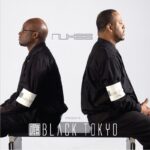
Probably late 2016. We're in the making of the second release for* AUX 88 Presents Black Tokyo*.
Any European tour on the horizon?
Actually, we're going to Paris this weekend, we're doing some shows there.
I couldn't help checking out your rider and noted specifically the fresh ginger item. Was that your demand?
Yes.
Awesome. I'm a ginger addict myself!
Oh, are you? Nice! It's so pure. You know, if you're going to drink any kind of Cola or anything: Lots of ginger.
It's almost otherworldly how powerful it is , I think. It's so good. Your favorite recipie?
Any kind of ginger. Gingerbread, you can give it all to me (laughs)! I love ginger.
How do you usually consume it?
Through liquid.
My favorite is to take a green apple and a cubic inch of fresh ginger and just juice it. The perfect fruit shot.
Nice. I'm going to have to try that! I love apple martinis and stuff. I'm a big apple fan, too.
Please name some other artists from the Detroit underground scene that you find interesting right now.
I'm actually working with a hip hop artist that will be coming out next year. His name is Tommy Vercetti. He's one to look for. Really one to look for.
What do you think of Michael Moore?
The documentary film maker? I don't have a negative opinion about him. I just think that when he exposes some of the truth, people reject it because it is the truth and they want to believe something different. That's pretty much all I can say about him. He digs really deep in something that he believes in.
I think of the main character from the novel Confederacy of Dunces everytime I see him! Can you tell me about a prank you've pulled?
My favorite prank, wow, I have so many, man. I'm silly like that. I'll tell you this one: We won two music awards back in 1999. We have Detroit Music Awards every year, we have Eminem, you know, everyone from Detroit, a lot of artists nominated. I was talking with my record label, and they were saying, you know, AUX 88 was nominated twice, and they were saying that they didn't think we were big enough at the time to get it. So, we walked away with two awards, came back to the studio, and when I walked down there, I had my head down.
They were like, "oh, man, don't feel bad" and so on, "don't worry about it, we'll shoot for it next year." I was pretending like I was crying, and went "I just don't understand, I thought we were good enough" and they were going "oh, man, don't worry about it, give him some water, give him some water" - and then I just pulled the awards out from behind me (laughs)! "Freakin' no way!" That was pretty cool, just to see the expression on their face. They were sincere, you know, they were feeling the hurt for me, and when I pulled the awards out, they were like "No way!" I probably shouldn't have done it, but I just had to.
You know Kelli Hand?
Yes, I do! I love her music. It's a little different from most Detroit stuff that comes out, but I love her stuff. I really love Kelli. We were actually going to sign with her, early on.
Any chance of a collaboration with her in the future?
Everything's possible. This is Detroit, you know. You run into people who live here, have a conversation, and the next thing you know, you're working in the studio with them!
Interview by Daniel Sterner