/
Talk
Wilco
October 26, 2015
Being smart is sort of a curse. You'll be met with suspiscion, envy and apprehension everywhere. From your family, school, work and the authorities. The only way to get by, socially, is either: also be a joker, make beautiful art, or just keep your mouth shut. People won't appreciate your smarts unless you provide them with some kind of entertainment as well.
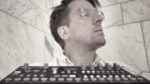
Wilco opted for the art thing. Music, to be specific. They’re probably the smartest outfit in American popular music to date. But you needn’t worry about that. Just listen to the music, digest the words, if you wish, and enjoy.
Immediately before going on stage in Ohio for one of the first shows of the Star Wars tour, we had the opportunity to talk to their keyboard player, Mikael Jorgensen, about musical instruments, literature and space science. Smart stuff.
What's happening?
I'm on tour with Wilco right now, and I'm standing outside the Rock & Roll Hall of fame in Cleveland, Ohio. We had a short visit to the archives, where we saw the handwritten lyrics to Purple Haze by Jimi Hendrix, a set list written by Elvis Presley in 1972, and loads of great photographs by Henry Diltz.
It's a beautiful day the second day of a twoandahalf week Wilco tour. We’ve been starting the shows by playing our new album, in order and then we play, well, Wilco's greatest hits, I guess. (laughs)!
We finish the show with an acoustic set where we all play acoustic instruments. I play melodica, acoustic guitar. It’s been really fun to end these shows on a quiet moment rather than a big loud rock blowout. It's a US tour, but we'll be coming to Europe in 2016.
Wilco have a pretty solid literary tradition. Is it possible to convey a literary influence through a synthesizer, that is, to transform prose into frequencies (figuratively, and perhaps literally, speaking)?
Music is a mode of expression that is it’s own language. So, by default, music is a poetic device. These are the questions that... did you have to start with the hard ones?
Sorry about that! Please name some key influences for you, musical & literary ones.
Ah, musical influences, I'll try to whittle it down. It ranges from Elizabeth Cotten, a selftaught, acoustic folk singer, to Ralph Hütter and Florian Schneider from Kraftwerk, and then, I recently saw the Amon Tobin ISAM 2.0 show. That was a stunning display of human expression and technology in this seamless presentation. That was a transformative experience. I was fortunate to be able to see it after Wilco played at the Outside Lands Festival in San Francisco.
I was completely stunned, floored and inspired by that show. It was very techy, but also very emotive. That for me is what's exciting, making music in 2015, the intersection of human expression and these incredible new tools that exist. Also, I've always loved the music of Brian Wilson and the Beach Boys, Randy Newman, the list is unending.
Do you know Bill Bryson?
I'm afraid I do not!
His works include “A Short History Of Nearly Everything,” “A Walk In The Woods,” and “At Home” the latter being a history of the home and tells the story about things like why we have forks, salt and pepper on our tables and things like that. His writing style is informative and humorous I love it.
Sounds intriguing. I think some of the most poetic stuff can be found in factual literature!
Yeah, human beings are fascinating. We do surprising things, good and bad.
What feeling is evoked when you use an Analog Four, for example?
As for the feeling it evokes, wait, just a second, there's a helicopter flying overhead There's a quality about electronic music, and making electronic music, that poses this idea that there might be order to the chaotic maelstrom of being alive. Whether it's true or not is, perhaps, another discussion. But, for the moment, it's like, ah! there's order,and there's a system in place. It's predictable and reliable but yet, still can be surprising and challenging.
When did you first come across Elektron instruments?
I was working at Soma Electronic Music Studios in Chicago, IL in the early 2000s with John McEntire of Tortoise. He had gotten a Sidstation, probably as soon as they came out and loved how raw it sounded.
John got a Machinedrum a few years later and he swore by it. When I was looking to buy a standalone drum machine I asked him about the MD and he remarked how it still is one of his favorites, and so I finally got my own.
When the Analog Four came out two years ago, I just thought, wow, that is going to be really, really fun to sketch ideas out on the road. I wound up using it in my other project, QUINDAR, an electronic music project with my friend James Thomas.
We're remixing the NASA audio archives. A large part of it is improvisational. Knowing my way around the Analog Four, I can MIDI sync it to my Ableton rig, and then just start making patterns. I'm using it in a sort of complementary way to what we're doing. James uses an Octatrack. We're very Elektron oriented.
Tell me more about QUINDAR. What does the name mean?
My friend James and I, we had been playing music independently for a long time, and we decided to get together and work on stuff. He had access to the NASA archives during a fellowship at the Air and Space Museum in Washington DC. We thought, we should just use some of this stuff, and make some songs out of it. We started talking about it, and getting together and recording, and the next step was realizing we need a name.
I thought, what are the names of those beeps that happen in the transmissions from Mission Control to the Astronauts in the space craft? You know, the (whistles a sequence of two succesive notes, the second approximately 50 Hz south of the first) sound, and then you hear a bunch of astronaut chatter. James was like, yeah, good question! They are called Quindar tones.
What I found really poetic about it was that there is a module, like a modular synthesizer, that plugs into the Mission Control panel apparatus, and it's a two oscillator synthesizer that sends a signal into space that says: “Hey, are you there?” Then it gets the confirmation return signal, “Yes, I'm here, and everything is still good.”
I thought that was a beautiful idea to use to form a band, and it has this great name.
How do you balance software and hardware nowadays, composing, recording, performing?
It's a hybrid, with varying degrees going either way. With Wilco for example, as soon as we've done this interview I have to get back to the venue and continue building my Ableton set that contains all of the piano, electric piano and various samples for each song. For a live setting, the sample libraries for vintage keyboards, pianos and organs are so rich and detailed, that there is practically no sonic difference between the real instrument and samples.
On the other hand, I have a Korg CX3 going through a bunch of effects pedals and into an actual Leslie rotating speaker cabinet that I’ve had modified to accept a much more powerful amplifier to be able to really reproduce some thunderous low end without distortion. It can get REALLY loud when I need it to be.
Do you reckon that is a good trajectory, to deeply integrate analog synthesizers and software?
Oh, absolutely. I know that there is a modular synth political faction that's like, "hardware only!" "No laptops allowed!" I can understand and appreciate that, but at the same time, I've got to do a show that I can replicate from night to night, so I need some reliability with the things I use.
What's the closest thing to a perfect moment for you as a member of Wilco, so far?
There has been some amazing moments. We have a new song that is always different, the song You Satellite from Star Wars, there's a moment when I start turning knobs on my synthesizer that's pretty great!
You're going to play Magnetized tonight as well, I hope?
Yeah, we play the whole album.
I recently saw a film (I think it was Private Lives of Pippa Lee) where the character played by Winona Ryder drops the line "You're not worthy of Wilco" when her boyfriend doesn't immediately resonate with her desire to listen to a Wilco song.
That's really funny! I haven't seen it.
Being a band with such obviously good heads on your shoulders, is the Winona Ryder remark something you feel is perhaps shared by a mainstream audience, the feeling that you have to somehow qualify, to be worthy of listening to the music you guys put out?
Oh God, I hope not! We're here for anyone who wants to listen. We're not a club, it's not a membersonly situation.
You have some Danish and Norwegian circuitry in you. Do you like to visit those countries at all, outside of as a touring musician?
I have a lot of family in both Norway and Denmark still. I don't get there quite so often these days, I have two children at home in California, so traveling to Denmark and Norway is a little challenging. But I love it. I went there often as a kid. That's so deeply part of my DNA, figuratively and literally.
So what's your favorite Norwegian word?
I don't know! My parents were first generation, and my dad said, we live in America, we're Americans, we only speak English. So I grew up without speaking any Danish or Norwegian.
While I'm there for a while, I can kind of pick it up, but I'm not fluent by any stretch. I know more Spanish than I know Norwegian (laughs)!
Have you read Bug Music or otherwise experienced the works of New Jersey (NJIT) music professor David Rothenberg? His study of cicada sounds and electronic music is nothing short of awesome!
No, I haven't. That is very interesting, to take these natural sounds, physical sounds, and then do convolution on them, and use this physical phenomenon to change or modify another kind of sound.
That's actually one of the things that Amon Tobin was doing with his show. He took a metal spatula, had it hanging 3/4 off the side of a table, and struck it, recorded it and manipulated it in the computer. Sounded lovely. Like a drunk robot dropping bitcoins on the floor at a bar. I think that's an incredibly rich resource for new kinds of sounds, new ways of combining the technological and analog world. I approve of that!
When is the QUINDAR album set to be released?
We're going to be recording in October, and we're going to have everything set up and ready to go, we'll have the Octa and the A4 and the Machinedrum, and improvise stuff on the spot.
That's my favorite experience, just get a bunch of stuff going and try to get the song to happen from nothing, with very few preconceived musical ideas.
We’ll be performing in 2016 here and there. Lots of Quindar to come!
Awesome. See you there!
Interview by Daniel Sterner