/
Talk
The Horrors
May 9, 2014
The Horrors have been described as the Bauhaus of our time, but with better teeth and life expectancy. They have come a long way since their formation a decade ago. Then, grainy garage rock in makeshift venues about the underbelly of London. Now, highly refined rock in vast arenas and Indonesian tea-houses alike. With their new album, they are sure to dazzle the world. Meet their dapper keyboard player, Tom Furse.

Please tell me you named the band after the famous final words of Colonel Kurtz.
Nope, the name just came from the word "horrors." It can mean lots of things but we were thinking of it as kind of cheeky: "Oh, you bunch of horrors!" That kind of thing. Little did we know that the band would become what it is today. Had we, we might had chosen differently, but that’s all part of the journey. I actually don’t like horror films at all. They do fascinate me in a grotesque way but they get under my skin too much, they really infect my imagination, and not in a good way. I loved the book Dracula [by Bram Stoker] as a kid. That I can deal with. Then Twilight came along and ruined vampires for everyone.
A real horrific scene took place near London a week ago - heavy rain filling up the Thames threatening to flood the whole city. When I saw it on the news, images from The Drowned World written by your late, masterful, Shepperton prophet J.G. Ballard inevitably came to mind. Did the rain affect you in any way?
We were lucky to avoid almost all the major weather. I hope events like that serve as a wake up call, we need to protect ourselves against this extreme weather and do something to address the causes. The idea of a submerged London does worry me, it’s my home and it always seemed so permanent, but it could all but disappear if things got really bad in the future.
What do you reckon is the cause for the current resurge of interest in analog technology; analog recording, film-making and photography?
I’ve thought a lot about this concept, what is it that draws us to analog formats. I think it has something to do with imperfection. Science strived to create perfection, sharper prints, higher quality audio, etc. and we lapped it up, we still do really. Check out an HFR film, they look shit, but the specs are way, way higher than anything we’ve seen in cinema before. But then we found out that not everyone likes perfect, many people would prefer a grainy photograph over a super high-resolution one, or listen to music on vinyl over mp3. I think what draws us to these imperfect mediums is that life isn’t crystal clear, I don’t just mean in an emotional sense, but also visually and aurally. There’s a layer of noise in our lives that we filter out, but if it’s not there it freaks us right out. Go into an anechoic chamber and you’ll know what I mean. Analog mediums retain this layer of noise, digital mediums strive to destroy it. That’s where I think the fundamental difference lies, and where the appeal comes from. No one would want an analog oscillator with zero drift and perfect tracking, or at least it’s likely they would find them sterile. This imperfection is such a huge part of what "analog" means to most people.
Perhaps we just want to mold and shape our creations with our bare hands and minds again? So much of our activities are constrained by the circle-squarers. When you're using social media, when you cook or when you make music - the framework in which you conveniently operate is often influenced by a distant third party. Perhaps a large corporation. If you take a step back and look at it, this shackles our freedom.
Well, I think social media is a wonderful thing but it leaves us open to all kinds of abuses. That abuse can come from an individual, state or corporation. This has been in the news constantly since Edward Snowden. I do believe that it’s ultimately worth the risk though, there’s so much scope for people to work together in ways that have never existed before. If one day we shook off the shackles you talk about, which are very real and very scary, there’s a scope for global co-operation the like of which has never been seen.
Are you familiar with the sonic explorations of professor Trevor Cox, who encourages people to share their findings of singing sand, singing underground stations and so on all over the world? Recently, I heard singing ice just a few hours drive from where I live. Do you have an unusual or eerie sound location and experience that you can share with us?
I’m not familiar with Trevor Cox, but I am familiar with the work of Chris Watson of Cabaret Voltaire, who has been an influence on me. He made it clear that sound doesn’t just exist in instruments, but all around us. It can be in the wind singing through wires or under the icy lake. It’s all fair game, and technology allows me to go walking in the park one day and incorporate all the sounds I record into a musical composition. There’s amazing sound all around us, but you have to listen. This isn’t a new concept, but it was new for me and was hugely inspirational and very freeing. Suddenly everything is an instrument. I stole a knife and fork from a restaurant once because they gave off the most beautiful ring when they were struck together. You can extrapolate that into a sampler and suddenly you have a new instrument, different from anything else.
There is a tape-measure factory in Rayleigh, near Southend-on-Sea, where you can find many rare and beautiful industrial sounds. The twang of 30 meters of spring steel would be hard to find anywhere else. Ask for Janet Butcher, say hi from me and I know she'll let you in.
Ha! I like what you’re talking about. I might drop by one day.
One of your many side projects is called Spider and the Flies. Together with fellow Horror Rhys Webb, you traveled back in time to revisit some of the magic produced by the BBC Radiophonic Workshop almost half a century ago. This sounds like a dream come true!
Rhys and I had acquired a few old synths between us, he had an SH-09 and a Pro-One, I had a Yamaha CS-30 and an MS-20. We went to a studio where we knew there were loads of synths that we could borrow. VSC3 and ARP 2600, for example. Neither of us really knew too much about what we were doing, it was a very naive adventure. But very fun. We also had Barry 7 [Barry Smith from synth-legends Add N to (X)] as our spiritual guide. He helped us see through the noise. We composed and recorded a space-themed EP in three days, just making crazy noises and funny melodies. It is one of my favorite records I’ve been involved with. The Radiophonic Workshop was a big inspiration for us then, as it is now. The other-worldy nature of the music spoke volumes to us. Now if you go to where it was it’s just offices or a storeroom or something, all the gear is in a cupboard somewhere. Terrible waste of a VSC3! The BBC is terribly bureaucratic though, there’s no way I could get inside that cupboard without supervision and form filling. There is a little plaque though, nothing official, just a little plastic sign that marks where the power used to be supplied to the workshop. It’s not a commemoration, just a tiny sign that no-one ever removed. Every time I am there, I stop by it and pay my respects in some silly way.
Whether the project is a salute to the 1931 classic Silly Symphonies cartoon The Spider and the Fly, or not, remains unclear. In the film, the spider antagonist plays his web like a harp and manages to attract and ensnare all the lady houseflies. In any case, Tom’s own entanglement with synthetic instruments started many years ago. He recalls stumbling across one of the Elektron instruments a couple of years before the Horrors came into being. But it was not quite love at first sight.
I remember seeing the Machinedrum and thinking 'that’s pretty cool!’ But I went for vintage gear instead. I guess I was lusting after the sounds I heard on my records, and that meant 606, 808, 303... all that stuff. So the Machinedrum never really popped up on my radar again. However, when the Analog Keys came out, I started to read more about this synth and it sounded like the synth that had been made just for me. It truly looked like a godsend, everything I needed in one keyboard. So I got in contact with Elektron and they were extremely helpful and welcoming. A few weeks later I’m sitting here surrounded by Elektron gear, and I think I might possibly never look back, they are truly remarkable instruments, better than any of my old classic synths, something I didn’t think I would ever say about any piece of new equipment.
You've got all the black machines, the Octatrack, The A4 and the Analog Keys, right?
I love them so much! Honestly, the Keys and Four are the best synths I have ever used. They sound fantastic, not like any one classic synth, they have a sound all of their own. The effects deserve a special mention too, usually on board reverbs are cheap sounding, but the reverb on the Four and Keys is beautiful and highly musical, which is just what you actually want out of an effect. Usually I’d record sounds without reverb, adding a really good reverb later, but with the Four and Keys I’ll happily record with the reverb on. Away from the sound the sequencer is perfect for me, I’ve often said that I wish I had more hands and now with a four track sequencer in front of me I kind of do. I’m looking forward to writing with the band with these synths as they’ll allow me to do so much more in the moment than I’ve ever been able to do before. I can’t believe that I can have one keyboard that can be a synth/drum machine/sequencer/clock and it actually sounds amazing and be so playable! It sets the benchmark of what a synth in the 21st century should be capable of.
The Octatrack is a very different thing but equally as fun and engaging an instrument. I love the A-B slider for doing crazy effects in a take, I kind of wish the Keys and Four had the same thing! It’s so much more playable than your average sampler because of features like that. I’ve been using it to back up synthesized beats from the Four and that’s been very fruitful for me. I feel like all of them are very forward thinking music machines, the kind of thing future music will be made on. I’ve often thought about how much old technology has been rehashed recently, but these feel like new ideas, new possibilities. I’m now considering selling a lot of my older gear, I’ll keep some choice pieces, but I think now I’d rather use the Analog and make a more unique sound than go to something like the 303 which has been heard on tens of thousands of records. There’s no reason to covet vintage equipment when there’s a synth like this available.
If you had to pick a favorite?
I guess I’ll pick the Analog Keys, just because it has a keyboard and individual outs. That makes it much easier for me to play chords and the outs allow me to get a lot out of one keyboard. But the Four I love too, because it’s so compact and can do so much, and really the little button keyboard is perfectly useable for most duties. I actually play with better timing on them!
Without so much as a hint of hesitation, Tom goes on to reveal a few routines he likes to do with the synths.
I like to set up patterns where each track is set to totally different lengths, jam out some sequences and see what happens, taking my cue from Eno’s generative experiments. I’ve got some beautiful evolving ambient pieces from that technique. Also copying one sound to all the tracks and programming little modulation differences, and then playing in Unison to get huge sounds. Using parameter locks to cycle through wave forms on sequences is fun. Rudimentary wavetable! Not something that you can do on a lot of analog synths. These are probably not the most original tricks but they’re the kind of things that I’ve been doing as a result of getting to grips with what the Keys is capable of. I found myself going to the manual a lot more than I usually would but that’s to be expected with so much functionality. Once I started playing around, though, it was quite intuitive and often it was just a case of looking something up in the manual once and then not having to go back to it.
I have no doubt whatsoever that you will have mastered the Elektrons in no time, as far as any mortal can, by the time you go on the road. I can’t wait to see you on tour this summer. Even if it means I have to fly to Finland. Speaking of tours, what has been the best place to play, of all the venues in the world, so far?
It’s hard to say, sometimes you go somewhere and play and it’s magical, and then you go back and it’s nowhere near as good. Also tours have a way of blending into one long adventure, not individual shows. We’ve played some crazy places though, football stadiums, Indonesian tea rooms, racing tracks... some of them fun, some of them hell. I do love touring America, it’s always a lot of fun.
Lastly - please share a memorable prank that you and the Horrors have pulled!
I’m not really much of a prankster, you’re talking to the wrong Horror! We used to get up to all sorts when we started out, people were right to think of us a bunch of cheeky fuckers. I think we might have got it all out of our system now, you’re unlikely to see a Horror pull a prank these days. Apart from Faris [Badwan]. He loves that stuff. Stink bombs, garlic sweets, you name it. There was a period when there was a 10% chance that if you lit a cigarette the end would explode and there would be Faris with this totally innocent face, like he was as stunned as you. Then the grin would come.
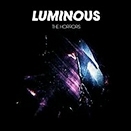
Get a taste of the new The Horrors album Luminous at www.thehorrors.co.uk, where the songs and videos "I See You" and “So Now You Know” may be freely enjoyed. Please, do not take drugs while watching. Instead, by shutting your eyes and pressing hard on your eyeballs, you can produce psychedelic light patterns directly on your retina. The scientific name for this effect, I believe, is phosphenes.
Tom Furse interview by Daniel Sterner