/
Talk
Neybuu
March 26, 2015
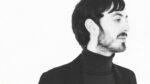
Neybuu spent ten years in India studying the art of tabla. Now she's back in the misty mountains of Portland, cross-breeding her divine drums with a choice of electronic instruments. If you haven't heard the bouncy, trippy, genre-defying music of Neybuu yet, you're in for a treat.

Would you go to the Portland Zoo, or do you prefer the rose gardens?
I'd prefer the rose garden, but I've never been to the zoo so I'm a bit biased. Because of my politics around zoos, I don't think I'm going to end up going there any time soon. I have been to the rose garden, and it's just lovely. There's so many different varieties. By the end of it, your nose is completely overstimulated!
What does Neybuu mean?
Neybuu doesn't have any literal meaning. Ney is my nickname, and buu is something that isf cute and sort of Hindi sounding. I think it has a nice ring to it.
How would you describe the music you make?
I'd say it's experimental dance music, first and foremost. Right now, I've mostly been playing with what I call minimal footwork. Of course, my tabla make for a unique sound palette to draw from.
There's also some industrial in there?
Yeah! People are often surprised that a woman makes music that's this hard. But I have very eclectic taste in music. For example, I really love Skinny Puppy (featured in this Elektron Talk). Their live show was super inspiring and reminded me of how important it is to actually *perform* on stage!
Please give me a walk-through of your electronic setup.
It's ever evolving. My current setup revolves around the Octatrack and Rytm. From there, I sequence and process the Oberheim SEM, Roland Jupiter 6, and Vermona DRM1 MK2. Occasionally I'll bust out the Miku Stomp for some vocaloid weirdness. Once it's all laid out, I record it into Live and send it off to the mastering house. I've also been experimenting with controlling the modular synth that lives in my studio with the tabla.
What acoustic instruments do you use?
Mostly the tabla and my vocals. I've been getting into field sampling as well.
Tabla are musical drums. Don't they blur the line between percussion and melody?
They do! That's what I like about them. It's what makes them one of the most beautiful yet difficult instruments to learn. The only other drum that comes to mind with as much tonal flexibility is the West African talking drum. Many people think the tabla have a vocal quality to them.
A lot of pain and effort has gone into ordering, boxing in and categorizing stuff according to Western discipline and tradition. This goes for music, science and society. Don't you think there's a risk involved if we yank this superficial, but very real, matrix away?
Yeah, I do, but I like that risk. There's always these questions, what is traditional, what is fusion and so on, and it's important to discuss these things. I'm happy to do that. It's most important for people to feel free in their own decisions about art.
Name three things that impressed you while living in India.
One, music is integrated in the entire culture in a way that it isn't in the West - everywhere there's music. In the streets, markets, temples, in people's homes.
Two, when you go to India as a Westerner, it completely shakes up your sense of what's real. All the chaos, and the poverty. Most people don't have much to call their own. Regardless of that, they are often much more happy than people in first world countries. To see that they are happy and they don't have a lot of things is an eye-opening experience.
The third thing is the transmission of learning. In India they call it the *Guru-Shishya Parampara* which is the Indian way of instruction. Basically, it means you are 100% devoted to your teacher and the knowledge they impart to you. Nothing else matters. This knowledge is considered sacred, and is hard-earned. For me, that meant proving myself as a devoted student. That lead to endless hours of practice and lessons with my Guru. Not to mention the insane bike commute through Varanasi to get to his home!
Where'd you see an Elektron instrument in the first place?
After using other sequencers like Live and the MPC, I wanted a fresh approach. I found some good info online about the Octatrack and started watching videos. I decided I had to try one, so I went to our local synth shop in Portland, Control Voltage. One of the employees there, Joseph Pailo, gave me an excellent demo and I was immediately sold.
What's your favorite technique, using the Octatrack?
I like to live sample the tabla and process them with effects. Sometimes I add neighbor machines. It makes for endless possibilities! I also like to use scenes for morphing between effects. The MIDI sequencer is very conductive to happy accidents, especially when you get all the LFOs running.
In what way do you think a classic Indian musical instrument and a contemporary Swedish electronic instrument is a good mix?
Simply because I love the sound and musicality of the tabla. When you combine it with the incredible processing power of the Octatrack, or use tabla samples in the Rytm, the experimentation is never-ending.
According to traditional Indian beliefs, the world goes through a very long time-cycle, dies, and is reborn. In the first epoch, people are taller, brighter and live longer. From then on, in succeeding epochs, things basically degenerate. We're now in Kali Yuga, the most mundane stage, of short, uninformed people that don't live very long lives, near the end of the world as we know it. Apparently, music is the one, untarnished interface between high and far-off times and our sorry state today. Do you share this world-view?
Well, I am a bit of a scientist about it. I studied religion and history, and find the cyclic world view interesting from an academic standpoint. But I guess after ten years in India, it also seeped into me a little bit. I love the idea that music is, in itself, sacred.
Who's your favorite Indian artist?
My favorite is my guru, Ishwar Lal Mishra. Not just because he's my teacher. He happens to be a world-renowned tabla player that toured with Ravi Shankar since the 1960's. That earned him the reputation of being one of the best tabla accompanists. He's also a very kind human being, and one of the funniest people I know!
Please name another artist that has inspired you.
There's so many, but I have to say Stevie Wonder. I'm so taken by him. He's in his 60's and he still performs at full capacity. I recently saw him with a massively huge backup band. If I can accomplish a live show that does 5% of what I saw that night, I can die happy.
What's a perfect moment for you?
My studio in the mountains, surrounded by all my tools, looking out over the lake. Then I'm in the zone.
Interview by Daniel Sterner
Photo: Rooney Studios