/
Talk
Martin Sköld
February 3, 2015
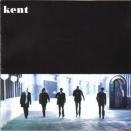
Martin Sköld is one of the most successful Swedish musicians of the past few decades. Starting out as the bass player of the crazily popular band Kent, he somehow, somewhere, found himself surrounded by electronic instruments. His most recent musical adventure, called Closure, looks set to be the most mellifluous surprise to emerge from Sweden since Ingrid Bergman.

What is Closure?
It is simply me, my friend Johan Wohlert from the Danish band Mew and the extremely talented Ninsun Poli on vocals. The indie-pop outfit Mew is not that well known in Sweden, but they have a huge cult following in Denmark.
Ninsun is a great singer, with a solid solo career of her own. You might have heard her perform with the Swedish band Familjen, not long ago. Me and Johan spent last fall writing songs, then all three of us went to the studio and recorded our first four-song EP.
It's been hugely rewarding to work with Johan and Ninsun. They have their own regular outfits, like I do with Kent, but I'm sure we've all grown and learned things during the Closure project that will enrich the future works all of us will create. It's still too early to tell if Closure will take off, whether it will just be this one EP or if we go on to produce loads of albums. In any case, it's been a terrific experience.
I've done a lot of composing on my own, but it really dawns on me, working with Johan and Ninsun, that the best things you learn, you learn from other people. You can only get so far studying, listening and experimenting on your own. It's when you work with other talented people that your work takes those truly giant leaps forward.
Was there a lot of shuttling between Denmark and Sweden for you all in order to get the rehearsals and recordings done?
Well, the geographical distance between the three of us is really what has caused the project to take such a long time to happen. The way it has worked so far is that me and Ninsun start working, and then Johan takes the trip northward and we all come together and finish the song. Now, finally, the EP is more or less complete. Time flies.
What was your first synthesizer?
First of all, I wasn't that young when I entered the world of music. I've always liked electronic music and synthesizers, but I was 18 or something when I started playing in a band. I had played the piano from a young age, I took piano lessons and all that, but I wasn't really interested. Music wasn't my thing during high school. My dad was an Organist and I didn't see myself doing that. I wanted to do sports instead. Play soccer. That was going to be my thing. The first band I ever played with was Kent, or rather the band that was to become Kent, eventually. I played the bass during our early years. I thought synthesizers were cool, but it took some time before I got around to actually playing them. I was 28 or 29 when I got my first synth, that was when I began collecting and learning to play synthesizers for real. The first synth I got was a Mono/Poly. I've still got it. I also bought a Telemark. Then I started buying the Elektrons.
I got the Monomachine first, then the Machinedrum. I got the Monomachine back in 2007 or 2008. At that time, we had grown pretty fed up with our sound. We wanted something new to happen. I wanted to make that change, and I think that was my line of reasoning when I decided to get it. I wanted to plug my bass into something that would allow me to chop up my basslines and alter them. I bought it at a music store called Jam in Stockholm. The guy working there told me how to use the Monomachine to process incoming audio. So I got it, and Kent went to Berlin to record our Röd (Red) album. During our time in Berlin, I spent a lot of time exploring the Monomachine. It felt like such a novel instrument, and I really wanted to get under its skin. All the fun ways of making melodies with it, the ways you can build your own arpeggios, for instance. You know, if you listen to the album you will realize there is a lot of Monomachine in it. It was the glue that made everything stick together, and in a way it was the new sound that we had been looking for. The Monomachine made it all fit beautifully. It was just what we needed to make the things we wanted to make. We had found our new blend.
Let's see, what else - I've also got an MS-20 that I've used on a lot of our recordings. I like the real subby bass sounds that it makes. If I want a sub sound that makes the whole room vibrate, that's what I'll use. I also have a Voyager. I have a few synthesizers that I've collected over the years. At one time, I had them all hooked up and synched so I could use them all at the same time. Nowadays, I prefer to use them more selectively, one at a time, depending on what I want to make and what instrument I feel like using.
The Analog Four is one of the synths I've used a lot lately. I find it wonderful. And it was real easy for me to start using it right away. It handles a lot like the Monomachine, which I had already mastered. First of all, the Four is a real slick instrument to write songs on. It's pretty small and convenient so it's easy to just stick in a bag and bring back home with me so I can continue tinkering after my day in the studio is done. I like to make a few melodic strands on it, get my guitar and play something on top of it, try out a few ideas, sketch away until I get something good. That's how I come up with a song, and it's a real liberating way of working. I don't think I could have come up with the same ideas if I was just sitting in front of a piano.
I think the Analog Four is such a great thing because any tool that makes writing a song uncomplicated and fun is a fantastic tool in my book. I'm easily hooked by melodies, cool sounds and a certain attitude when I'm composing. The Four lets me jot any spur-of-the-moment idea down and play around with it without any hassle, and control where I want to go with the song. It makes my job easier. Not everything ends up in the final production, of course. But it's a good start. A great start. Especially at times when I sit down and just shuffle my worn-out chords around, then it's time to grab the Four and lash out a melody or two. It's great for trying out ideas.
Do you think synthesizers are tools just like any other tool, each fit to its specific purpose, or do you sometimes feel that man-machine magic we've heard other artists muse on in previous Elektron Talks?
Well, I can really sympathise with the fact that you have a synthesizer you really love, like my Mono/Poly, which I truly love and wouldn't want to part with.
I'm going to have to sell some of my instruments soon, I'm moving to a new studio far less spacious than the one I'm currently in, but I don't like the prospect of selling my Mono, or my MS-20, they are my personal belongings and they've been by my side for so long. They're so personal because I have made my mark on them, left my own imprint on them.
Sounds like your first synthesizer sets off the same kind of psychological mechanisms as does your first true love. You never really can let it go, can you?
Yeah, for some people that's probably true. In my case, I don't think so because synthesizers weren't a part of my life until fairly recently. I know a lot of people who'd fit that description, though. They would never forget their first 303. For me, it doesn't really run that deep.
What are your top three musical influences?
There are so many, but if I can pick only three I'd say Kraftwerk, David Bowie and Bob Marley. From an early age, I was into bands like Depeche Mode and I also listened to a lot of reggae.
Do you recall your first encounter with an Elektron instrument?
Yeah. We were doing a tour with another Swedish band called Familjen. Andreas Tilliander (featured in this Talk) had just got his hands on a Machinedrum. He let me try it out when we were on the tour bus. That was my first meeting with an Elektron. Andreas was really into it and he couldn't stop talking about it. That was probably in the back of my head when I got the Monomachine before going to Berlin. Later, through Andreas, I got to know Daniel Troberg. He was really helpful and I spoke to him a lot when I was learning to use the Monomachine. He did a nice remix of one of our songs, too.
We also did some songs for the Swedish TV-series Ettor och Nollor (directed by Johan Renck) using the Analog Four. I would compose something melodic on it, then the four of us just started jamming and it would usually work. The Analog Four was crucial to our contribution.
Tell me about some of your solo projects.
I did an instrumental electronic EP called The Fire is On Me! last year. I also did an instrumental album called Musiken på Vägen Hit, originally a soundtrack to an art exhibition by a visual artist named Jesper Waldersten. Check them out on Spotify.
Please share a perfect moment you've experienced.
At the Lollipop festival in Huddinge, Stockholm, back in 1995. It was the first time we performed in front of a large audience, 10 000 people or so. It just felt like we had some kind of hard-to-describe connection there. Most of the audience had no idea who we were before that performance. We had a hit song called Kräm, which later would become our breakthrough single, and you could just feel it in the air, at that very instant people got it. Now they knew who we were. It was a moment of pure magic, a truly special experience for me.
After that, sure, we've had shows where everything just clicks and works the way we like, but that first moment was something else. I think part of the magic was due to the fact that we had no idea what the future would bring. We felt that anything could happen. And it felt good.
With companies like Clavia, Teenage Engineering and Elektron, tiny Sweden is starting to leave quite a footprint in the hardware synthesizer world.
All the brands you mention make really cool stuff, stuff I like to use. There's a lot of interesting Swedish software plug-ins, as well.
Regarding this software or hardware debate you hear a lot of people going on about, I'm not so sure I agree something sounds better just because it's hardware. There are some really great plug-ins out there. But hardware, almost invariably, is a hell of a lot more fun to use.
Lastly, can you please share a technique or routine of yours when using an Elektron instrument?
No routine as such. When I'm inspired, i like to just grab my Analog Four and whip up a random melodic sequence. Then I can tweak it a little, and maybe I've got an intro there. Maybe it's a song, which just needs some chords added to it, and a kick, and maybe a bassline.The beauty is I can do all this at home. Then I've got something to work with, and the next day I can bring it along to the studio and make something out of it. I also think it's cool that you can sync the Analog Four to an 808.
I use the Elektrons to get started, that first phase when an idea turns into a song. Sometimes, of course, the sounds also end up in the final production. The Elektrons are very distinct. I love those machines.
Interview by Daniel Sterner