/
Talk
Kid Koala
June 25, 2014
Kid Koala (Eric San) is without question the most prolific and fervently productive arboreal marsupial in the northern hemisphere. Apart from evolving the artisan craft of turntabling (and getting picked up by Ninja Tune at the age of 22), he has scored films, produced graphic novels, books, and, most recently, a new take on the classic vaudeville show. He is one of the three pillars (the other two being Del and Dan the Automator) of the fantastic hiphop edifice Deltron 3030.

You dedicated a song to your 3-year old daughter. That was a beautiful thing to do! At home, do you let her play with the turntables?
Absolutely, yeah. You have to replace the needles all the time, but it's ok. I have extra needles. I'd rather not make her feel intimidated by it, you know what I mean?
How'd you come up with the name Vinyl Vaudeville?
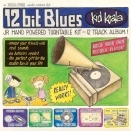
It all started around the release of the 12 bit Blues album. I came across this dance troupe called Adira Amram & the Experience in New York and we brought them on the road to do their own show when The Slew toured in 2009. They're some of my favorite people, the three of them.
When 12 bit Blues came out, we talked about how to present some of these songs, because I didn't want to make just up-tempo versions of all the songs to play. I said, these are really slow, 6/8 rhythm, you know, real slow and bluesy, but kind of sexy songs. They said, we can do something more like a vaudeville burlesque kind of take on it. And I thought that was great, so for all the 12 bit Blues songs in the set we would create a spectacle, like a vaudeville show where every song becomes its own act. It has a different theme, it has different characters, different costumes and choreography and silly interactive things that happen. And that's all it is, it's really a variety show.
When I think about it, I wanted to make the most low-tech high-tech show. High-tech in that, well, there's still three turntables, six samplers and a looper and all that stuff to make it happen, but at the same time balancing it with just some of the oldest forms of entertainment technology. Puppets, dancing girls, comedy, paper planes and kazoos, it's all stuff that's a little bit nostalgic. When you give a whole bunch of people kazoos and when you start having a paper plane fight, you can see it in their eyes they kind of regress - you know, like, yeah, I remember!
I wish you wouldn't wear that suit on a day with temperatures in the mid nineties!
You thought I was going to pass out? There are some moments when I feel light-headed and realize I better take the hood off. But it's fun. It's part of the spectacle. It's for trying to create a child-like energy for the audience, you know, forget about being cool, or what you're wearing or whatever. If the person on stage is already ridiculous-looking, people loosen up, you know what I mean? It's not like they have to study what's going on, I mean, you can, there's a lot of technical stuff happening on stage, but I didn't want that to be the reason they're watching, I wanted it to be just fun and dynamic.
Did you use the Octatrack today?
No not today. I used it when I did some recording with Arcade Fire, for the Reflektor album. The beginning of the album is me chopping stuff up on the Octatrack. I really love the Octatrack, actually. I use it not just for beats but for step sequencing ambient layers. On my last couple of projects I have been using it as an evolving, atmospheric machine. It's amazing at that. To take drones and make it skip on certain things is really interesting, and to control the evolution of the sound - it can do all of these things that have a rhythmic identity to it. I also have two SidStations and a Machinedrum and I'm looking at getting the Keys, that's probably my next Elektron purchase. I love keyboards, melodies and harmonies. I started on piano, so that's my main instrument.
A piano is a very discrete instrument, as each key has its well-defined position and tuning, while a spinning record, played like an instrument, is extremely analog. Was DJing an uprising against your classical piano training?
Absolutely, yeah. From the age of four to about twelve, those first eight years, my only musical experience was classical piano. It's a very formative time for a child, and I had a very strict musical schooling in those early years. There was always a competition, an exam or a recital where you were being adjudicated. The pressure was always very high. It was good, except as a young child I couldn't see how you could play these songs with any of your own intention. I was only doing what I was being told by my teacher, don't speed that up, don't swing that rhythm because you're going to lose ponits. So, for the first eight years it was always about keeping track of score, preparing for competitions, and that really took the creative element out of it for me.
When I discovered the whole scratch scene I found it to be totally different. It was like, whatever you do, do it in your own style! If you get on the turntables that night, make sure you do something no one has heard before. You can refer to stuff from the past, but twist your current energy and story into it. It's a completely opposite philosophy in that scene. I really took to it at that age, during my teenage years. And now I've been scratching for 25 years, and it's kind of coming full circle in that I'm still very curious. Oddly enough for me, it means I'm now practising shit that I hated to do on the piano, like scales and arpeggios and learning to bend notes into the right intervals. I don't like it because it's hard, I like it because it's next. If you're scratching, and you have a melody in your head, can you do it by playing just one note off a record and then bending it into a melody? That's what I'm practising mostly now.
I have realized, as a foundation on any instrument, whether it's a turntable or a piano, you have to learn the technical side first, then you can kind of forget about it and just speak through it. But when you're a kid, you want to be out playing with your friends. You don't want to be inside practicing scales! There's no such thing as wasted time, it just took me a few decades to realize that it wasn't wasted time, you know.
In an interview from 2007 you compare the mushrooming public interest in analog turntabling to the rise and fall of skateboarding. Are you a skateboarder, too?
I recently started, mostly because Del has. He's 40, and has recently gotten very into skateboarding. People keep giving him skateboards so on the tour bus there are all these extra skateboards and I'm trying them out, too. I'm not going to go pro or anything, but just the idea of teaching yourself some new thing appeals to me.
In that comparison you mention, what I meant was there is a rise and fall in the mainstream interest in skateboarding, but there's always a core, an underground subculture that never stops. At one point you can buy a skateboard at 7-Eleven. Everyone has them. Then the next summer they're all in a box in the garage. Except for the ones used by people who were always doing it. The same goes for turntables. The kids that scratch do it not because there was neccessarily ever a future in it. They do it because they love the craft and know how to express themselves through it. I'm definitely one of those people.
Your albums are tastefully sprinkled with references to songs and cinema across a wide range of genres.
People call what I'm doing a lot of different things. Multi-disciplinary or whatever. To me it's just an art thing. It's not always going to be a song. Sometimes it's a story, sometimes it's a story book, sometimes it's a story book with a soundtrack. It comes from the same place. I don't actually turn off my music head and turn on my drawing head or something like that. It's all very interconnected to me. You can listen to a Rodgers and Hart song or something and be blown away by the lyrics and the timelessness of it, or you can listen to a rap beat and just be blown away by how that swing just makes everybody's head nod.
In every genre there's something really flipping. I always try to listen to that 5% of the genre that is really moving, you know what I mean? A lot of other stuff is done for a variety of different reasons, trying to be commercial or trying to be this and that, but when you distill it to the authentic form of each genre there always seems to be a lot to enjoy there. I think DJs are always trying to connect the dots, anyway. For me cinema, music, narrative and storytelling all goes back to my first record experiences which were storybook records. Those were like movies for a kid! You read the story, heard the voices on the record, the sound effects and the music underneath, the underscore, you looked at the illustrations - it was a total escape.
Which was the first Elektron instrument you encountered?
It was the Sidstation. The first person I knew who had one was Dan the Automator. He told me about it, then I got one in a store in Montreal. I grew up on 80s video games so the 8-bit sound was very endearing to me. With the Octatrack, I kind of have to get my Octatrack brain on because it's such a deep machine. It forces you to explore how certain combinations of filters et cetera will help evolve those basic tones, often to a surprising extent. It's a very, very amazing machine.
JG Ballard claimed that the 20th century finally saw the triumph of the visual image over the written word. As a man of both visual and sonic arts, which of these two sensory media will ultimately be the winner, the day the universe calls it a day and switches off?
I can't separate the two. If you told me I had to stop drawing comics or stories visually, I would be sad. If you told me I can't make music anymore and only draw, I would be sad. I'd probably quit both at the same time. They're really fused together in my mind. If I'm in the studio recording a track, I'm usually trying to score an imaginary scene or make a soundtrack for a character or something like that. That's what's informing. If you listen to Carpal Tunnel Syndrome or Some of my Best Friends are DJs, those aren't radio format songs, they don't have verses and choruses, but they do have a narrative throughout. If you listen close for those, then, like the storybook records, they become a universe of characters, living in the music somehow.
Immanuel Kant claimed there are three sides to aesthetic perfection: The beautiful, the true and the good. If you'd turn these ideals into hats, who'd wear what in Deltron 3030?
The true would be Del, because he watches current events and does a lot of reading and then synthesizes all that information. When it comes back out it's a very unified and informed vision of the future that doesn't seem to be that outrageous, actually. Even though some of his verses sound grim we're not that far off from what he's talking about. Some of the stuff from the first albums have already come to pass. I'm not saying he's a prophet or anything, but he does have that George Orwellian style, his writing is based on actual events. What's the other two? Me and Dan have to be either good or beautiful? I don't know - I guess I'll be good and Dan'll be beautiful! He did all the string arrangements which I thought was really beautiful. He brought that classical realm to Deltron. I just try to fit in where I can and help it lift when I can.
Do all members of Deltron use Elektron instruments?
Del also has an Octatrack and Dan has a SidStation. I like that Elektron is moving into the analog world, you know. Having those ghosts in the machine along with all the options of the digital world - that's what I love about them.
Kid Koala interview by Daniel Sterner