/
Talk
John Tejada
February 28, 2007
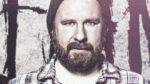
Meet John Tejada, musical wunderkind usually jammed into the minimal house/techno fold. Born and bred in the perennial culture capital of the world, Vienna, and tutored in classical music, he wound up in LA at the age of 8, started playing the drums and has since kept the West Coast techno scene footloose. As I spoke to him in his LA home, snow fell on the city for the first time in 20 years.

Given the world hotspots for your style of music, have you ever considered living and working in Barcelona or Berlin?
No – I let everybody else do that! I was born in Vienna and came to LA when I was 8. I like it here. Maybe the scene is not as hot here right now as in Barcelona or Berlin, but I don’t feel like making such a drastic move. I like the West Coast.
I understand you are a classically trained musician?
When I was four, in Vienna, I started classical piano training. Both my father and mother are world-class classical musicians. When I was eight and moved to the States, I started playing the drums. My cousin had a drumset. Today drums are the instrument I can play very well and still practice every week.
Within classsical music, there are well-established conventions regarding what instruments fit where and how a composition is structured. Do you feel this also the case when using electronic instruments - that a canon is in place?
Well – it certainly seems that way! You get a genre, and everyone is following the genre with its restrictions and rules. But there is also a few people who step up and change this – like the first time there was a live drummer in techno music.
In what way has your equipment changed over the past ten years?
If I just think ten years back in time I guess that was when computers entered my life in a big way, from the first soft sampler to gradually having all the stuff in the computer. Four years ago I started collecting hardware again. Elektron started off that addiction with the MachineDrum and then the MonoMachine. I was touring around, I was bored with the computer. Coming home from Frankfurt, on the plane, I was having fantasies about building things from scratch on a 16-step sequencer – I really got the itch to buy hardware. Back home, I straight away got my MD and MM from a local store.
My first track with these was Mono on Mono. With the MonoMachine I can control six other synths – it’s just fun to have instruments again. Ten years ago I had a really slow Apple Mac computer, a hardware sequencer, Cubase and an Ensoniq ASR-10. Also Junos, an 808 and a 909. Today I have a lot of hardware in my studio – I like boutique monosonic stuff. Apart from the MD and MM, I have a Minimoog Voyager, Cwejman and Semtex. Also I use the Dave Smith Poly Evolver, Doepfer sequencers and a Nord G2 modular.
I've heard you exclusively use Elektron gear when you perform live.
When I play together with Justin Maxwell we only use Elektrons. It’s this idea we had ’cause we both had a MachineDrum and a MonoMachine each. Hooking them up to a DJ mixer – it’s such a great feeling to play with them because they’re real instruments. A lot more fun and spontaneous than using laptops. For the ”I’m Not a Gun” project I’ve been trying to blend what I do with a really great guitar player [Takeshi Nishimoto].
Trying not to sound pretentious, but get the best mix out of the two different instruments. The MD added a whole texture that I couldn’t get with my virtual instruments.
Are there any limits as to how exotic sounds you can create? Does it get harder or easier to create truly original sounds?
I guess it’s like the old saying: the more you learn the more you realize you don’t know anything. The more I learn about modular synthesis, the more I realize that there’s so much more to learn – I think it’s always important to have a distinct, new idea, something on which you can start all over again. I think of the Elektrons that way, instruments that let me build new voices from scratch.
Regarding technology evolution — do you believe it constantly enables new styles and genres to be created or does it today only allow deeper forays into already established styles and genres?
I think first and foremost people have ideas. There’s always some obscure producer coming up with new sounds, but it also depends a lot on the technology we’re talking about. The pre-set boxes available are really no step in the right direction. You can get a computer pre-loaded with everything, 10 gigs of loops, and it gives everyone the ability to create music. My studio four years ago, I had everything in the computer. I got to the point when I got stuck all the time. I got the urge to start »cutting corners« and then it really was no fun. But I’m excited about the more experimental software tools coming up. Whatever technology, I believe in a simple, pure idea. It always ends up being the most impressive I think.
What do you feel is more important — always doing new and original stuff — or listening to what the fans like and want most and focus on that, in other words, what's the most important drive — the internal or the external one?
Definitely the internal. I was making tons of songs before I put anything out. I sometimes miss those times! The feeling of pure personal gratification, the ability to make yourself happy. It’s important to remember that.
With the early synths and drum machines, often the constraints and shortcomings were what made them original, loved and remembered — primitive analog filters and imperfect synthesis of real instruments were what came to define styles and genres. Is this dimension lost today with ever-refined electronic instruments?
Well, with the pre-set boxes I mentioned before there is no magic or excitement. Why even call the new Juno a Juno? But I think it’s still there with the boutique synths – modular, one-voice things with no pre-sets. It’s got my brain, hands and ears working together y’know. Like the Elektrons, which started off my collection of instruments again.
Do you have a tip or recommendation you can share with other Elektron users?
The thing I learned during my last live show was holding down the function key and hitting the classic reset button. Having these patterns and programmed stuff and then going back to classic has a really impressive impact.
Visit John Tejada's official facebook page here.