/
Talk
Jennie Abrahamson
April 7, 2026
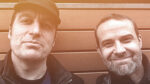
A world-wide Volvo commercial theme song, a Peter Gabriel world tour and a Polar Music Price performance usually means everybody knows your name. With Jennie Abrahamson, that is not the case yet. We hope to do our bit to change that, so we met up with her and had a chat under the great Älvsborg Bridge looming above Elektron HQ.

Please tell me your musical origin story!
My first memory of being swept off my feet by music was when, at the age of three or four, I first heard a recording of Tchaikovsky performed by the Moscow Symphony Orchestra. I shut myself in the living room, listened to it over and over and pretended I was the conductor. I danced and conducted, imagining the music flowed out of me and my movements. I did that routine day after day, listening to that record.
I started playing the piano at a very young age, and my family was a musical one, to begin with. Music was something I was brought up to enjoy and express, rather than a choice for me. It would have been a more dramatic choice on my part if I’d decided not to get into music! It’s what I am, it’s what I do. Simple as that.
You’re from the outskirts of Umeå, the far North of Sweden. To what extent do you draw from the tundra environment for musical inspiration?
According to a quote that a Russian magazine ascribed to me (laughs), all my songs are about the nature and wilderness of Umeå! Granted, I did grow up on the outskirts of Umeå, and somehow that probably had an impact on me. I’d say it was the specific music culture more than nature that inspired me, though. It was a small village with nothing much happening, so those of us who were into music became a tight little community, inspiring and supporting each other. We still do.
I live in Stockholm now, but I always treasure the moments when I’m able to go home to visit, it’s a shoreline cabin flanked by forest. A place for recreation and creative recovery. For me, and I think for most people, there is always a resonance with the place where you were raised, wherever you may move to later in life.
One thing, looking at your songs from the past decade, is how exquisitely you choose the instrumentation for each song, always a specific setup that gels with the mood and feel of the music and lyrics. What’s the secret to that variety?
First, thank you! Although I think I’m getting more focused for each new album, in the beginning, I think the variety of sounds and instrumentation was due to musical exploration and a crucial part of the, sometimes fragmented, process of finding my own musical expression. Also, I love playing instruments that I do not already master, in a sort of overconfident belief that I can learn anything in a very short time. I’m getting pretty good at cheating!
It’s also because I quickly get bored doing the same thing, I mean, I’ve been playing classical piano since I was very young, so I tend to feel too familiar and used to that instrument. My hands behave in predictable ways when I sit down by the piano. Switch out the piano and bring in a marimba, for example, and it’s a completely different thing. The different sound and the impulses I get inspire another melody, another song than what I would have had if I’d stuck with the piano. I wrote my entire first album on guitar, as I was learning to play guitar. I think it’s about surprising myself and staving off boredom, keeping music from becoming routine.
Lastly, my co-producer Johannes Berglund is, of course, a huge part of the sound and feel of the songs, we’ve been doing all the albums together, and we’ve played together since I was 13 years old.We moved to Stockholm roughly at the same time, too, share a studio, and we both inspire and evolve musically from working together. We push each other, support each other and make sure we have fun working, always shoving that potential boredom away.
That variety, from the key of a song to the instrumentation, is rare in pop music. I love the whistling in Åträsk! Your voice is an astonishing instrument, and you keep finding the most delectable analog and digital companions to it. What’s your take on analog or digital instruments?
I've been lucky enough to work with musicians who are deeply into vintage analog synths, and from my background in the indie scene, there were even organ buffs who had torn their instruments out of an abandoned church or something! A lot of the people I spend time with, and a lot of the music I listen to, there's that lust for a vintage sound.
The people I work with now love new technology just as much, but the sound must have that warmth in it. Personally, I love the fact that digital technology lets everybody be a bedroom music producer, but you can really tell the difference in sound with a piece that has been made entirely on a computer.
I'm a Seventies person at heart, who loves working in a modern environment. My latest album has a backbone of live recorded analog sounds and was mixed, mastered and produced using modern equipment.
When did you first learn about Elektron?
I came across Elektron when some friends of mine started using them, and I got curious and started asking what it was and what it did. I’m going on a big solo tour this fall and felt the need to be able to control the sound in a little bit more detail, down to filter types and settings and things like that. I want to steer the sound to a cohesive, warm place for this project if that makes sense. After a great deal of googling and asking around, I found this box that did exactly what I was looking for (the Analog Heat). It’s my first piece of Elektron kit, and I really love what it does.
What, in a nutshell, does it do to your sound?
I use it to heat up a couple of my favorite synths: A GEM PK4900 from the Eighties, there’s a lovely trombone sound in there that gets poignant when Heat-treated, and a tiny JP-08 module that needs a little gain and EQ to beef it up. It’s so easy to get the sound right and tweak it on the fly live.
Did you always have an arsenal of instruments at your disposal?
No, I was a classical piano girl. With Heed, one of my first bands when I was in college, we created everything together even if we were not always in the same room or even city. We were an entirely studio-based band, which was rare in Umeå at the time, and I was introduced to some new equipment there. We had Fredrik Kallander in the band, who was very into analog synth stuff and samplers, and the pop-smith and producer Henrik Oja. I learned a lot.
I’ve always been keen to discover and learn new instruments, but I didn’t own that many when I started out. Not like today, when 15-year-old kids can have a neat little digital recording setup in their bedroom with all the world's instruments at hand. All you need is a computer, really.
How about right now, let’s say you could only play acoustic or electronic instruments from now on, what would you choose?
From age five to twenty-one, I was focused entirely on classical piano, an instrument that I have a deep love/hate relationship with today. I’d have a hard time getting rid of that, but I’m also crazy in love with the Eighties, big sounds, processed sounds.
The thought has crossed my mind: how about making life simple and do solo tours exclusively at venues where they already have a grand piano? I tried it on a gig in Bilbao last year, didn't bring anything and played a beautiful grand piano piece they had at the theatre, and it is convenient to be able to travel light. But, no. I love music machines, I love to be able to process sounds, so if I’m forced to choose one or the other, it’s electronics now. Why would anyone have to discriminate like that, though?
It’s funny how, when analog synths sprung up in the Seventies, people thought the sound was far out and outlandish compared to acoustic instruments. For kids today, I think it’s equally alien and far out if they hear an oboe or a grand piano in their feed!
Definitely. It’s charming to see kids freak out at the sound of a trombone: wow, that sound is so fat! They see it as next and new, not the geeky instrument that it really is! I love that, the idea that the sound is all that matters and should matter, not whether it’s coming from an instrument that is cool or not. Did you see that clip of the bass-playing Youtuber, the crazy guy who plays his bass suspended from a crane? When he played some jazz fusion to a bunch of kindergarten kids, they went completely bananas! That sound was the best thing they had ever heard. There is no judgment or preconception.
The unmolded mind of a child.
Right! When I write, or when I talk about my writing, I always return to that as an ideal. To create, you need a sense of fun and playfulness. The best way to achieve that is to sort of go into an open, impressionable state that is sort of like that of a young child. It’s usually a struggle, for me at least, a time-consuming process to go into that mode. You can’t be editor and creator at the same time because you’ll edit stuff out at a faster rate than it is created.
When I make the first demo, I need to be in that playful state, so I intentionally use tacky sounds at this point to just focus on the song. Thing is when I did a colloquial lecture at the Piteå Music University recently they wanted me to play back some early demos of mine, and I was amazed at how much of it ended up in the final version! In the process of creation, being playful, quick and impulsive is so much more important than finding the perfect bass sound or something like that. At least for me.
When you use the Analog Heat, to you gravitate toward enhancement or distortion?
I’d say warmth and sizzle! That’s all I want (laughs).
You’re used to everything from crammed rehearsal spaces, small venues and lugging your own gear around to touring with a sizeable team of professionals, lavish hotels, and limelight. Which experience do you prefer? The gritty or the glossy?
Touring with Peter Gabriel on five long tours, I've experienced huge arenas, staff, lavish equipment and a bit of that gloss as you put it. I mean, flying in a private jet plane? When I got home from the first tour with Peter, I immediately went on tour with my regular band, crammed into a station wagon and drove from Sweden and through France, three gigs in three days. I love both experiences because I like the contrast!
The funny thing though, it’s basically the same experience as the gritty, carrying stuff and cramming into a van. The core process related to the performance is the same. You’ve got to rehearse, you’ve got to test and manage all the equipment you use, whether someone is there to help you set it up or not, you’ve got to perform like it’s the most important performance each time you go on stage.
Sure, some things may be more convenient if you’ve got a team of professionals helping you with logistics and setup, but the actual core stuff, it’s the same. If anything, I prefer setting up my own gear, connecting cables and all that, because as I do that, I can prepare mentally for the performance at the same time.
Your three favorite artists?
Peter Gabriel is one of them, for sure. I found my notebook from fourth grade recently, and in it was my answer to an assignment where we were supposed to describe our daydreams. Mine was to meet people I admired. Peter was one of them, and Nadia Comãneci, the great gymnast, was the other. I used to be a gymnast, too. Hearing the Peter Gabriel So album in 1986, I started thinking about production for the first time, even though I had no clue it was called production: how do you decide what instruments to use, how do you make it sound the way you want to, how do you write lyrics and music? I played that record over and over, trying to figure it out!
Bob Dylan is another because he was my entry point into a real treasure: the folk music genre of the early 1920s. He’s just an amazing artist that I’m interested in many ways. The weight of expectations on him, there, he’s supposed to represent an entire era in music, and socially and politically, too, but he’s just a man who wants to have some privacy like everyone else. Lyrics-wise, he’s been really inspiring.
There's a bunch of women who have inspired me too, but if I must choose one, maybe it would have to be Björk. I was in my teens when Debut was released, and it had a huge impact on me. I loved the fact she wasn't singing nicely, she was singing from the gut, 100% emotions. And I loved the fact she was so involved in the process of making the music and was her own, completely. That was very inspiring for me as a young woman getting into the business. Björk has been in and out of my listening radar over the last 25 years, but when I saw her show in 2012, I was entirely blown away. I cried throughout her entire performance. She’s just so incredibly powerful. Totally uncompromising in her artistic work. As a musical being, with integrity second to none, she is amazingly inspiring.
Interview by Daniel Sterner
Photo by Beata Cervin