/
Talk
Hank Shocklee
June 14, 2018
Meet Hank Shocklee, producer, songwriter and Rock and Roll Hall of Famer. He’s known for being an integral part of Public Enemy, producing other greats such as LL Cool J, Ice Cube, Salt-N-Pepa and for his ever inventive, persistent exploration of sound. We talk beginnings, analog versus digital and fighting the power. Put your feet up, sit back and enjoy!

What pivotal moment made you dedicate your life to music?
It was kind of an epiphany that it happened, because I was in my second year of college. Everything that I've been doing has been centered around music, but I was in college for economics and marketing. I realized that I didn't like to work in that field, but I wanted to learn as much as I could about it. I decided at that moment that I wanted to dedicate my life towards music, because I've done so many things. I've also been an avid record collector from the very beginning, since I was five years old, and my father was an avid collector of jazz. Growing up in Long Island in New York, in a suburban household, we had our house wired for sound. Every place would have speakers in it. Bathroom, kitchen, every place! In the Sixties that was unheard of. Not many people had sound throughout the entire house. Then, next to me was a band. So, I've been fascinated with music and sound, and I started building my own sound system when I got into my teenage years. I started building speaker systems, amplifiers, things of that nature. I was just fascinated about how it worked and how to always increase the quality of sound. I guess that's the short version of it!
Sounds like you were immersed in sound and music from the get-go. Do you share some of your dad's tastes in music, like jazz?
You know something? I hated jazz when I was a teen and when I was growing up (laughs)! My cousin was the one who gave me the real bug, because when he came home from Vietnam, he had all these records, mainly a lot of 45's and albums of a lot of the funk artists: James Brown, Wilson Pickett, Parliament and Funkadelic, Sly & the Family Stone, and Kool and the Gang. You know, my house was dominated by jazz, and my mother was a classically trained pianist, so when I heard that I flipped out! My cousin also introduced me to the lyrical aspect of those records. Marvin Gaye's What's Going On; I read the words, Bob Marley's Rastaman Vibration; I read the words, Sly & the Family Stone's Stand! album; I read the words. Then I got hooked on consciousness in music. Because music to me was not just about partying, even though my parents threw a lot of parties. It was the message in music that intrigued me more than anything. As things moved forward and I met Chuck when I was throwing a bunch of gigs in Long Island, he decided to become one of my MCs. From that point, we created a bond and a relationship, exploring this thing called sound and music through DJing. From that point on, I was always interested in how music moved the consciousness of people in a forward direction. That's why I never really got involved in any of the gangster rap records or any of that stuff, because I don't believe that music should be used in a way that doesn't enrich the soul. It doesn't inspire you to do things or to see things in a different way, or be disruptive in any way. That's my focal point.
A quick follow-up: the guy who returned from Vietnam, that wouldn't happen to be Eric Sadler now, by any chance?
No, it wasn't (laughs)! That's funny, because we called him Eric "Vietnam" Sadler because he always used to wear these fatigue shorts. It's hip hop, man, and me and Chuck always felt you should have a colorful name, so we kind of gave everybody names (laughs). My cousin, he was older. I'm older than Eric. I'm the oldest of the entire crew! I bonded and forged everybody together with the whole Public Enemy situation.
You've won numerous accolades; multiple times Best Album of All Time, Rock and Roll Hall of Fame — is there any one of these accolades that holds a truly special place in your heart?
You know, it still holds a special place in my heart when people come to me and say how the music has changed their lives. To me, it's more the fans. I don't like to call them fans, I call them members of the community. My whole vision was for reaching out to what I consider to be unsung heroes, or underdogs. People that have worked so hard, but never really got any accolades or recognition in their work, but their work is significant in the forward movement of any movement or revolution or direction or company or whatever the case may be. When people come to me and tell me the story of how the music has changed the course of their lives, moving from negative to positive, those are the accolades that, to me, rings louder than all the other things that was recognized by the industry.
I know you've worked with Ziggy Marley. Did you ever get to meet his father, Bob Marley?
I wish I would have. When my cousin played me the test pressing, or rather the white label, of Rastaman Vibration, the album, I didn't even understand what reggae was! It was a foreign thing to me, because I grew up on a lot of calypso that my grandmother played, so we didn't get the vibration, you know? That record, right there, was probably one of the maybe five pivotal records in my development as a youth going into manhood.
Your productions, from the very beginning, had that enviable quality of being instantly appealing yet stick with you forever. What's the secret?
For me, it must be passion. The love of it. I'm a fan of every artist out there. Anybody that makes an inroad into the music sphere to me, I'm a fan of. I don't care how big or how small. If I like it, and I think they're doing something that's really, cool and significant, then I'm kind of like a fan! I'm a collector as well, I collect records like crazy. No matter who it is or what it is. Most people collect only records that they like, I will collect records that I don't necessarily like, but I want to study it and understand it. That's a driving force in me. That's the thing that compels me to put together an album. When we first got the deal at Def Jam, my mission was not to go into the studio with musicians and drum machines and synthesizers or guitars or basses or any of that stuff. I wanted to strictly go into the studio with records, to make records!
I can imagine you have a pretty sizeable record collection!
Well, I sold them a few years ago, because I digitized everything. The space requirements got to the point where it needed its own building. I'm paying rent, just for records, you know (laughs)! I had to downsize, and when the computer system came online, it made that transition a lot easier. Going back to the records: the fact that I want to make records out of records was unique at the time. Most artists at the time were sampling, the only question was that they were only sampling what I consider to be small bits. Maybe a two-bar loop, maybe a four-bar loop. Maybe just a kick and a snare, just a guitar riff or something. I wanted to make up all these little bits of records to create new tonal vibrations. When I was younger I used to go watch the older DJs play, and a lot of times in New York, they would play in a park or big field, and they would have the DJs in separate corners of the field, and they all would be playing at the same time. Me and my friends, I had a little bunch of close-knit friends that I used to go out with, we would search for the spot where all the DJs, the music kind of clashed together and created a different kind of rhythm by listening to all four DJs at the same time, at a certain spot. The sound that you would get would be something that didn't represent any of the records that they were playing, but it represented a new frequency of what was going on at that moment, from the contrast of all those DJs playing together. I want to recreate that vibration in the studio.
Wonderful! Finding the sweet spot amid all that chaos, of all that's happening?
You can even take that into the studio. For example, most people in the studio, they listen to their productions in front of two speakers that are symmetrical, right in front of their face. I think that's the worst place to listen to music, because most fans are not listening that way. No one listens to music symmetrically with two speakers in front of them! Everyone usually listens to music moving around, moving about, and the speakers are pretty much anonymously in the background. In the studio, I would always find that sweet spot where I got the feeling of the music, and not necessarily listening to what was happening in the music. That's the backdrop for creating the Public Enemy sound design, if you would. It was a conscious decision to craft a certain sound that I wanted to get across that I just wasn't hearing. That was the vibration of the records.
It was new in the Eighties to use such a large amount and such varied samples. This is a long shot, but were you influenced by the writings of William Burroughs at all, his cut-up stuff in writing, to build something out of existing fragments like that in music?
It's funny that you ask, because at the same time me and Chuck were music fans, we were also fans of art. We made our own flyers and stuff. The best flyers that we made were collage flyers. The closest thing, I would say, would be Romare Bearden, for example. To me, he's a sample artist. He makes his projects out of samples, a cut-up of other materials. That's something that has always interested me; taking something from another context and putting it in a totally new context. All those things were the driving force to me, for helping to shape the Public Enemy sound.
Can you share some of your musical influences?
Oh my God! I can't even say what was my musical influences. Let's just talk genres, that would probably be easier! I was inspired by alternative rock, new wave, psychedelic rock, heavy metal, punk, reggae, calypso, classical jazz, modern jazz, fusion jazz, I was inspired by what we would call "male vocal" whether it'd be Frank Sinatra or Bing Crosby or Dean Martin. I was inspired by disco, dance music, you know, there's so much music that I was inspired by to make the Public Enemy records. It was amazing, at the time, that a bunch of black kids from Long Island were even that diverse. None of my friends were that diverse in their musical taste. I was the oddball. The guy that was into so many different things that no-one really knew what I was into. The case still holds true today. For some reason, I've studied music from the record perspective. I've taken some classes on piano, and theory and stuff, but I've never really studied that, like I studied records. I studied records, and I study live shows, and I always was intrigued by how a band was comprised. Most bands, there would be one person in the band who's prolific, as a musician. Then the other guys were almost like what you'd consider background singers in a session. They were good, but they weren't as prolific as the main leader of the band. In a good band, everybody complements each other. Each instrument compensates for each other's weaknesses. Those were things that I wanted to bring inside Public Enemy recordings, to make it feel like, you know, not like one producer was in the studio, but a band was playing. That's why I enlisted Eric "Vietnam" Sadler and Keith Shocklee, my brother. Terminator X, Norman, was always with me. Flav did parts in records, I enlisted Gary G-Wiz. I've always been a fan of collaborating with all kinds of people, because to me music is a collaborative effort and not a single-minded effort. Part of what I hear today becomes so single-minded because everybody has a recording studio on their laptop. What you're losing is the diversity of the different aspects of music and instruments playing, and working together to figure out their uniqueness or their sound. That's why The Bomb Squad was pretty much formulated to fill the gap in that area. Nobody at the time was doing that, because in the rap world, all the producers were single guys. Whether it be a Marley Marl, Hurby "Luv Bug" Azor or Dr. Dre, you know, you had single guys producing pretty much the whole project. I wanted to do something totally different. I wanted this project produced like it was a band, so I had to treat everybody like they were a band member.
The philosopher Socrates thought of himself as the midwife who helped bring out all the great ideas of all the talented people around him, and I feel that you acted like the midwife as well, bringing the best out of everybody in the group.
It's amazing that you say that, because to me, music is a funny thing: it was never meant to be hoarded or celebrated by one person. To me, music is always a community thing. That's why, when I listen to people, and they talk about music, and they use the term 'my music.' I always take that as a sign of disrespect to the music in general, because you're making it specific. Music is community-based, man. It's for the world. I just think that creating a feeling of that, inside the record, is always the better scenario.
I'm curious about one specific thing, though: when Flavor does his bit of the vocal through an actual, land-line telephone. That was so awesome. How did you come up with the idea?
You know, what happened was, we were trying to get the telephone sound. For me, I've always been a big fan of energy. A lot of people don't seem to get that music and energy are two different things, even though they can be related. For example: you can create the telephone call effect with an equalizer. That will solve the purpose, but the energy will not convey that. The energy would be: if you took a sound of someone's vocal and ran it through an equalizer and changed it to sound like it came from a phone. Now, what I wanted for the sound is exactly to come from a phone. Because the energy of that: not only do you get the sound, but you also get the energy associated with the sound. Does that make sense?
Yeah, that's true.
There are so many people that think they can get by substituting something for the real thing. You don't pull up a drum machine and try to mimic a live drum set. It just doesn't work. It will always be a drum machine. If I sample a live drum, it still would be a machine. The energy is the drum machine.
Your mastery of the SP-1200 is well documented. I'd like to know if you've figured out what your new Elektron instruments will bring to the game?
I owned all the equipment that we used, anything that was used on all our records was equipment that I'd purchased, and I'm always looking for new equipment. When I saw somebody with the SP-12, when I saw that and I didn't understand what that was, I was like, oh I'm not sure what it was, until a friend had shown me what it did, that it was a sampling percussion machine. That's cool, but it was trying to be a drum set! Nah, this doesn't intrigue me, until I started understanding that, wait a minute, it doesn't have to have drum sounds! It could have sounds of records and everything into it. So, of course you must learn your product through and through, and it's funny because I really didn't get the Elektron bug until I heard a producer by the name of Chris Liebing. He pretty much said he was using this Elektron drum machine. When I heard his productions, I f***ing loved it, and I thought, I like this! I want to get this! So, I went down to the store, and by the time I got there, the drum machine was discontinued (laughs)!
That was the Machinedrum.
That's right. I was like, wow, how do I get it? Then, the guy from the store, it was in Brooklyn, he called me up and said, hey, you might want to try this thing called Octatrack! I said, really? He said, you like sampling, this is the thing! Once I got my mind set on one thing, it's hard for me to shift into something else. I did some research on it, and I said oh, ok, it is a sampler! It's strictly a sampler. You know, one of the tools that we also used, it's very well documented that we used the 1200 and we used the MPC 3000 and things of that nature, but the unsung hero of our entire collection was the Akai S900. That thing, we used on everything! In a million different ways. So, I was looking for a replacement for that, and so I picked up the Octatrack. I was like, this is fantastic! Even today, I'm still interested in sampling, but instead of sampling from records, I'm interested in creating my own sound to sample. The Octatrack got me onto that. Then, I just happened to be out at the show in California...
The NAMM Show?
Yeah! Everybody's been asking me to come to this show for years, and I never went. The first time I got a chance to go, because Native Instruments had a thing and they asked if I could come and I said hey, I'll come out. I went there, and the first place I hit up was Elektron. I was searching to find their location. I went there, and the first thing I started playing with was Analog Heat. Right now, I'm very much into sound design, but since I went completely digital, I kind of reversed my whole trend of thinking from the analog side to the digital side, and then I found out the things that are lacking in the digital domain are the things that the analog brings to the table. Overdrive and distortion. I started going on a fantastic journey to understand distortion in the digital platform. I started picking up all kinds of plug-ins and different things, anything that would give me overdrive or saturation, because that's the area digital audio lacks, because it's so clean, and so pristine, but it lacked the circuitry that you'd gotten when you run your digital gear through an analog console. That, right there just spawned me into going on a quest of distortion! Understanding its many facets. It led me to the Analog Heat. When I heard the Analog Heat, and started playing with it, the things that it offered! It was a hybrid of what you can do inside the box, and what you can do with a traditional analog distortion unit. It's a hybrid.
Yeah.
And this is the thing that interests me the most. There's always been this battle of analog versus digital: what's best and what's not good. I never look at that as a topic of discussion meaning what's better or worse, I look at what's different. I always wanted the control of digital plug-ins but in an analog box, and that's what Analog Heat is.
Awesome.
It's probably the most underrated tool out there right now, and the reason why I'm saying that is because the other side of the coin is understanding resonance. Resonance is something that the digital world does not do very well. It's just like the digital doesn't do well in reverbs, because reverb is all about resonance, and digital falls short there. This is where you need analog, because resonance is a thing that digital lacks. So, I used Analog Heat just to create resonance, not as a distortion unit because that's too typical. I'm using distortion to create resonance and frequency ranges, so that I can create more of a three-dimensional perspective on sound. Now, take that and move it to the Digitakt, which is a fabulous drum machine and sampler. That's something that I'm in the middle of exploring right now. The reason why I'm exploring that is because I want to use it in a non-conventional way. I could easily make a beat with it and I could do some twisting things and that's cool, but what I'm looking for is to find the thing it does which makes it different from anything else. When I use it, I kind of like create my own sonic signature with it. It's the same with all the equipment I've ever used. I've never used them for its intended purpose.
I'm just thinking, when you explore resonance with the Analog Heat, is what you're after sort of like what you mentioned before; that experience of listening to four independent sound-systems in a Brooklyn park at the same time, and at a specific place your ear picks up the sweet spot?
Exactly like that. The sweet spot is nothing but resonance. It's the place where the room vibrates, it's the place where the space vibrates, or your body vibrates. That's why people love analog. It's funny, because when we were making the Public Enemy records, Chuck would be listening to the cassette tapes of the demos that we did in his car, and he's listening to it at a volume that's so loud that you couldn't hear the fine aspects of the music! All you heard was distortion. I used to say, Chuck, it's totally distorted, how do you know what it is? He says: I like the sound! There was the beauty in distortion in the analog world that you can't replicate in the digital domain, because the digital domain is a copy, a photocopy of sound, and not the sound itself. Therefore, I was so strung out on the Analog Heat. You can call it an effects box, but I don't call it that. It's an instrument to me. I use it as an instrument. It's on everything! there's not one piece of sound that doesn't get that treatment. I just come from doing an interactive play from the Boston Conservatory up in Massachusetts, in collaboration with the Berklee College of Music, a performance called A Rose Out Of Concrete, and I used resonance extensively to create the sound. It came out so beautiful because people always hear distortion, and they hear noise, and they hear that as a byproduct of unwanted frequencies. It’s something that you shy away from, it's something that you don't get close to, because it's loud and it's boisterous. My thing is: how do you make that beautiful? How do you make what may be considered ugly beautiful and artful and colorful? That's the area that I'm playing with. Right now, my weapon of choice is Octatrack, Analog Heat, and I'm going to blast into Digitakt! I just got the new update where can move files interchangeably from the machine to the computer.
I love the fact that you consistently make all the instruments your own, disregarding what they're, so to speak, supposed to be used for. What sort of feeling does the Analog Heat evoke?
That's a good question. I think that the feeling that I get from it is the fact that it's outside of the speaker-box, so to speak. I'm not looking for the character that's embedded inside the speakers, I'm looking for what happens to the room outside of the speakers. That's what I'm listening for. How things vibrate. I'm also listening for, on the high end, how do I make the sound feel like rain? How do I get wet from listening to the sound (laughs)? That' s the area I'm using it for. Sound, to me, is not two-dimensional. It's not even three-dimensional. It's multi-dimensional! The key is, how do we find that? The beautiful thing with the digital equipment is that we can search and find those dimensions that haven't been in the "analog" world. That's why you're hearing so many cool sounds today. The idea is that we could make something that sounds ultra-realistic, or we could move into the land of the very unrealistic. I think that frequency range has never ever before been dealt with in music before. The future of music today is going to be, not necessarily finding the perfect beat that's going to make the hit record, but finding the frequency that matches someone's emotions and feelings at that particular time. My vision for music now is not about making a cool record, a cool tune that people can sing along with and dance. I'm interested in a different aspect of it. How do I invoke feelings and emotion through frequency? I envision that techno is getting close to that. What techno does, for me, is going into a room and listening to just pure vibration. Forget about what the song is and what it's doing. Forget the fact that it has a beginning and an end or it has vocals or it doesn't or is it danceable or not danceable - it's not about any of that s***t! It's about you just sitting in the moment, feeling frequency resonate through you. With the advent of the syndrones, the drone spaces, I think that there's a new genre that's being created that's anti all the other genres out there: just feeling vibration. When you go out to a club, or you go out to a lounge or bar, I think there will be places where people are just going to be in there and listen to sound. Not music, not song, not beats, but sound.
A sort of immersive experience, where you're part of the instrument. You're inside the instrument, when everything works out?
Exactly. You're feeling almost like being in the Matrix, where you can feel the vibrations of frequencies and sonics, but it doesn't make any sense to you, other than internally. That's my exploration for the rest of my time, now. It's all set. I could care less about songs and hits and that kind of stuff. I'm concerned about frequency and emotion.
What are you working on now?
I'm building out a project that's all about resonances. Think Music for Airports. There's a theme to it: it's just about resonances. The working title is Spaces. It's just about resonance and vibration, but to the point where it's not just ethereal, if you would, not just ambient. I want to give it an actual pulse, because we don't live in an ambient world. We live in a rhythmic society. Everything has a pulse. Whether you're walking, dancing or driving. Whatever you're doing: everything has a pulse now. We've been tuned to that pulse. The reason why ambient doesn't work for me is because it lacks the definition of the pulse that's happening in life. Even your heartbeat is that pulse, but you never pay attention to it. It's just constantly there. That's the blend that I'm finding with Spaces, between the real and the unreal.
Outside of Public Enemy, you've done so many beautiful collaborations and worked with so many greats; LL Cool J, Salt-N-Pepa, Ice Cube, the list just goes on and on. Do you keep in touch with all these people?
I don't really keep in touch with a lot of people. I'm kind of an introvert! I'm not really interested in the limelight, I'm not really interested in the celebrityism. I'm not chasing that bug. I'm more in a quest for, or more of an activist, for pushing sound forward. Whether it be hi-res audio, or immersive 3D audio, or headphones that are 3D or the use of stems now as a tool for augmenting the records that you put out, there are so many areas outside of the music realm that complements the music realm that I'm into.
All these components that you mention: the pulse, the resonance, really going deep into the frequencies and how they affect the inner workings of people, I'm just thinking, it's a perfect fit for the video game industry! Are you interested in that field at all?
I mean, I recognize the video games, but I don't play them. I haven't really tuned into them yet. For me, the video game world, when it becomes truly immersive, then I'm more interested in it. I think that it's starting to become more immersive. You've got the immersive eyewear now, the Oculus, so you can truly go into a new space. That's something that intrigues me, but before I get there, I want it to reach 2.1 level development. That's still the dominant driving force to me, you know, everyone is still listening to two speakers. I want to see how I can make that feel immersive. If I could do that, just going into the immersive world, to me that would be the next level.
Going back to Public Enemy and the first, or perhaps the second album most of all, the strong social commentary and bringing injustices into the light in a very powerful, vocal way. That resonated across the world, not just in the USA. What, would you say, comparing late Eighties to today's situation, where are we now in the countdown to Armageddon? Where do the hands of the clock point?
The Public Enemy records have gotten a new lease on life, if you would. It's been re-reviewed, but in a different way. You mentioned Countdown to Armageddon: we are, right now, in the apocalypse. A lot of people tend to think that the apocalypse means some sort of doom and self-destruction, which is not the case. Where we are right now, is we're blossoming into a new vibration, a new frequency. We've exasperated the entire frequency of where we were as people, to where we got to today. Now that system is no longer fitting for the future. The future is going to be us raising our consciousness level beyond our three-dimensional plane to four- or maybe five dimensions. So now we must start thinking on a totally different framework, and it's the advent of the computers that has allowed us to search and to push to these new dimensions, if you would. We couldn't have gotten there without the technology. Right now, we are at the beginning, at the cusp of a new age. Just like we've had the agricultural age, we went through the industrial age, now we're going through this new age, this new digital age, if you would. Digital just means a spirit of enlightenment. We now have to raise our consciousness level. The Public Enemy records before were about identifying the fact that we needed to move to a new consciousness, without necessarily singing that.
The imperative to fight the power is perhaps even more relevant today, on many more levels.
Right! The one thing about Public Enemy is that we never gave you the definition. So, when we say Fight the Power, what is the power? The power is the opposition. The opposition to creativity, to expansion, to enlightenment. Anything that's stopping that energy is the power, and that's what we fight. What you're seeing right now is that angst, if you would. It's like we're having birth. We're men, so we don't know what it's like giving birth, but we can empathize with it. Giving birth is a rough experience, it's painful, it's torturous. That's what we're going through right now. After that, once life comes, it's beautiful! What you see right now is the toil, the thunder and the lightning that goes along with the rain that makes crops grow. You must have the agitation in order to have the beauty that comes out afterwards.
Interview by Daniel Sterner
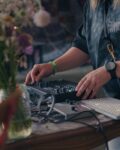
Photo by Michael Benabib