/
Talk
Fuck Buttons/Blanck Mass
August 21, 2014
The mill of the gods grinds slowly, and the result is usually pain. One man who is not afraid of pain is the Worcester son Benjamin John Power. Physical pain, during his youngster days skateboarding with his mate Andrew Hung, or auricular pain when exploring the sizzling, Stygian depths of sound - usually, also together with Andy Hung. Ben is a man of cosmos and chaos. A soft-spoken vegan, a fearless and unfettered live performer, and a provocateur. Read on, but at your peril: the following will contain some of the foulest words from the last thousand years or so.

How did you and Andy come up with the controversial name of your band?
When we started out, we used a lot of found gear. We were still students. We didn't have a lot of money, so we used to go to car boot sales and thrift stores to try and find instrumentation that was capable of signal processing and the like. The music we were making at the time was very abrasive and quite confrontational, you know. So I think, at the time, it signified the juxtaposition of the abrasive sounds that were being made and the cheap instrumentation we were using to make these noises. It's just a name. It kind of stuck. We didn't expect we would be playing to a lot of people.
Has your choice of name caused you trouble in any country?
Everywhere it's regulated fairly differently. It depends on what kind of radio show or other platform its used on. In Canada, most radio stations seem to get away with it. Obviously, in the US, it's a little bit harder, people will censor it in either way they see fit. We've been operational for about ten years, a lot of people just say F Buttons, and people still seem to get the idea. You know, we were used quite avidly in the 2012 Olympics, we were on the Olympics official compilation CD (Isles of Wonder, 2012), and they just went with F Buttons. People know what it means. To a certain degree, we have to accept being censored, but it hasn't been too detrimental.
You being a part of the 2012 Olympics sonic landscape is, well, unexpected to say the least. But very proper. In what way were you featured?
F Buttons had two songs in there. One track was used in the opening ceremony, and one during the athlete trail. There was also one track, Sundowner, from my solo project Blanck Mass, played by the London Symphony Orchestra at three occations during the ceremony. First time when the Union Jack was being carried to the flagpole, second time when the Olympic flag was presented to Muhammad Ali and finally when the Olympic torch was being carried along the river. It was amazing to go to the Abbey Road studios to see the London Symphony Orchestra perform the Blanck Mass songs! It was something else.
Are you a big sports fan?
I'm not as such, really! I'm not the sportiest of types. But it was a privilege to be involved in something like that. To have such a large part of it. A quite humbling experience all around.
How did you and Andrew meet and decide to make music together?
We actually met skateboarding in Worcester, nearly 17 years ago now. We didn't see each other for a few years after that. Then I went to university in Bristol and I saw Andy there. He was studying Fine Arts and he had made a short film which he needed a soundtrack for. We just got talking, and we decided that we'd have a go at making a soundtrack together for it, and it worked really well. So we just carried on making music from there, really, and, you know, the rest is history. Ten years ago now.
I've tried skating a couple of times since then but I don't think I'm as agile as I used to be. I'm worried about breaking a wrist or something. Can't do that in my line of work.
Tell me about your board.
I used to skate BLUEPRINT, an independent English skateboard company. The fat boards, not the skinnier ones. When we used to skate, Andy was more of a flatland, technical trick kind of guy. I was more of the idiot, that would attempt to throw myself off a ledge and land maybe once in fifteen times!
You contributed to the score of the controversial film Cherrybomb in 2009. What are your thoughts on breaking into the local leisureplex fitness center, donning your birthday suit and passing out in the pool?
Ha ha - they've actually used our music on quite a few film and television things of late. The music we make is largely instrumental. Everybody can paint their own picture to the sound. I think it lends itself very well to the film world. It's nice to see other people's interpretation of how they see the music fitting in different arenas. It's nice, obviously. Andrew and I, when we're writing stuff, and when I write solo stuff, it's kind of a mental framework when you start to conjure up images. It's a natural thing for me. Sound and image go hand in hand. And because there is no lyrical kind of guidance, everyone can have their own interpretation of the songs. That's something we are very happy with. I've seen the film Cherrybomb, and I liked the way our song was used. I think it worked really, really well.
I studied illustration at Bristol University, seven years ago. I used to do a lot of illustrating. Not so much anymore. I focus on the music now, which is my job, and my hobby also! I try to keep everything in-house, also the visual aspect of Blanck Mass and Fuck Buttons. Any visuals, imagery or artwork, to design a package - it's nice to be in a position where I can do that as well. Makes everything more in-house and organized.
Tell me about your solo project.
I put out the first Blanck Mass record in 2011. That was largely ambient, for the most part. The stuff I've been writing of late has a little bit more beat prominence. It's heavy. It's going well, and I'm enjoying it. I'm very close to finishing the record. I've done a lot of touring, I opened up for Sigur Rós last year. I've also done a lot of production work, and a lot of remixes, and some film stuff as well. I'm happy with the way things are going.
What musical burdens and responsibilities does it mean being a born-and-raised Bristol artist?
There's a lot of music in Bristol, obviously, but we've lived in various places. Blanck Mass never lifted when I was in Bristol. Andy and I grew up in Worcester, skateboarding together. That's 60 miles away from Bristol. It could have happened anywhere. It was more a meeting of minds as opposed to a product of our surroundings. I don't think there is a geographical stamp on our sound. I like to think it's a little bit more open to interpretation in that sense.
Speaking of heritage - do you have any Celtic ancestry?
Yeah, there is some Irish in my family, and some Welsh. We come from all over the place.
There is a rich Celtic-Norse cultural heritage of foul words. Ever heard the word wirling?
No, I've never heard of that. What does it mean?
It is a more than thousand year old invective from the north of England. It means evil dwarf. Here are a few others: Losangere (liar), asaleny (little ass), and wayryngle (villain). I just came back from Iceland and...
Me too! Fuck Buttons played in Iceland a few weeks ago. We played in the old Keflavik air base (popularly recognized as a key location in the Tom Clancy novel Red Storm Rising). We were a part of the ATP Recordings festival there. I was there for a week with my wife. It was great.
Guess you took a bath in the Blue Lagoon, then?
I did, yeah! It's the second time we've been to Iceland. The first time we were only there for a day, so this time we had a little bit more of a chance to do the touristy things that I guess that you need to do at least once when you go to Iceland.
Well, the tick-off touristy things in Iceland, I think, are the most enjoyable in the world. It's otherworldly!
It's very alien, isn't it? It's pretty unique. Volcanic, beaches of black sand - it's incredibly awe-inspiring.
There's hardly any people there! The streets are never crowded, the roads are never crowded.
Only one major city there. A small island. We drove for five hours to see a glacier, and the scenery is mind-blowing. And, like you say, not many people.
Being a historian and researcher in Iceland, I can imagine, would be very rewarding. They've got the oldest complete set of records of the people who live there, census records and also some original manuscripts from great skalds like Snorri. Literally more than a thousand years old. And if you're a fluent Icelandic speaker, you can pretty much read and understand the old manuscripts even today.
It's a really great place to be creative. I have a lot of friends there, like my friends from Sigur Rós. Blanck Mass toured Europe with them last year, for a month and a half. Ben Frost, if you're familiar with him, he's actually Australian born but for the last ten years he's been living in Iceland. There is a really interesting pocket of artists there. Their surroundings, I would speculate, are really inspiring for them to be around. You hear some great stuff coming from them.
It's a really special place. But on the other hand you also have the sulphury smell of eggs everywhere!
Yeah, there is a lot of that. You get used to it, though.
After a couple of days, I had a strange craving for eggs.
I bet they sell more eggs there than anywhere in the world!
Everyone's a Cool Hand Luke, downing 50 of them with little effort. Has it been a good touring summer for you?
It has. It's been very, very busy. I have a few weeks off now, so I'm working on completing a new Blanck Mass record. I've been working on it for the past year or so, but I've been touring a lot in between. The festivals have all been great, the touring has all been great, but now I have a little bit of time at home. I look forward to using the Analog Four and the Analog Rytm, which I've recently acquired, on the new record.
You and Andrew represent the hottest of lo-fi punk and the coolest of lo-fi techno, respectively. Can you tell me a bit about how the dynamic between the two of you works?
We don't write in front of the computer screen. The way we write a track, and the way we perform what we've written is actually part of the same process. We set up in a very traditional live sense and jam things out, with whatever sort of instrumentation. We're constantly altering the schematic of how everything is wired up and how everything is patched together. It's almost the same as you would set up modular synths. Each pedal is acting like a module and the initial signal source is very, very different when you get to the end of the chain.
The production and the writing process is exactly the same as the performance process. We record the tracks as we play them, and there's a lot of knob-twiggling in the process. There's probably two schools of thought there, in the sense that I come from a punk background. I started out playing the guitar. When I started using electronic instrumentation I didn't want to disregard that aspect. I think that's how the two worlds join, really.
What's your musical toolbox look like?
My wife and I recently moved to Edinburgh, and I have a little bit of a studio space there. I use Ableton and some other sequencers. I have a modular setup in front of me, oscillators, a dual oscillator, two VC 3000 and an interface which kicks out CV, a couple of old MFB units, an Empress Superdelay pedal - which makes a really nice reverse reverb - and the Analog Four and the Analog Rytm, which I've been using a lot.
I got hold of the Analog Rytm three weeks ago. I needed a solid drum machine. A lot of the drums I've been using before were live samples that I recorded with a four-tom, or whatever kind of samples I could lay my hands on. Now, I use the Rytm, and it's such an incredible machine, with all parameter-locking and the ability to assign a sample to each track - it's just really, really thickened out the album. I couldn't be happier. And the Analog Four is an absolute peach! I've just finished a track for the new Blanck Mass album, and it has some heavy Four and Rytm prominence on it. It sounds fat.
There are a lot of weird things you can do with the Rytm that even the developers couldn't anticipate.
It feels like you can always figure out a way to do anything with it. It's really versatile. And the parameter-locking is quite great, and obviously it's a really powerful live tool as well. There's so much you can do with it. It's probably the best investment I've made, I would say.
What do you think of the Elektrons in general, in terms of usability et cetera?
I find them very user-friendly. There are a couple of things that you have to wrap your head around, like the signal path, but once you're in control of that, I think it's really friendly. It took me a day. Once you're there, once you're actually inside, modulating the oscillators, or each parameter, or whatever really, you feel quite confident with them. I use them live and feel secure. They're solid as well. They're built so nicely. I'm really comfortable with them.
Do you still use a lot of toy instruments?
Some bits and bobs, yeah, but that was essentially when we first started out, hence the band name. I recently got the OP-1, which is a nice little machine. We like to travel a little bit light, as there's only two of us. That thing is bloody tiny, isn't it? It makes some nice sounds, and is quite beautiful. That was actually a suggestion to me from Jean-Michel Jarre (featured in this Elektron Talk). We don't necessarily use just old Casios now, but I still have an MT11 in my set. It has a really old pipe organ sound in it that I've used a lot. I don't like to get too attached to any one piece of instrumentation, because I like to keep things revolving. But I do have a soft spot for the Casio MT series. And, I'm not just saying this, I can see myself growing very fond of the Elektron Analog family.
Right now, the cut that I'm working on at the moment, the drum pads are made with the Analog Rytm. Way fatter than anything I've tried to build in the box before. And the Analog Four - I have a tendency to run a lot of my hard sounds through outboard pedals and such, but the Analog Four can manage to create a sound fatter than anything I have before, but completely in the box. It's going to be a really important dynamic tool in my writing. It has a really great crunchy sound to it and, obviously because of the analog circuitry, it's also super warm. They're very prominent on the new Blanck Mass record, and I'll be happy to take them out with me performing live.
By the way, you're a fan of Cosmos, right?
Yeah. Cosmos - A Personal Voyage, the original with Carl Sagan. He's a personal favorite of mine. I'm very interested in that sort of thing, so I'm very familiar with it. I've only watched one episode of the recent one (Cosmos - A Space-Time Odyssey, hosted by Neil deGrasse Tyson, 2014). I haven't really had a lot of time to watch television recently, except watching Battlestar Galactica with my wife.
It's baffling how Sagan championed public awareness in saving the whales...
I'm a vegan, so that resonates with me quite strongly!
... protecting the ozone layer from halocarbon aerosols, and saving the Earth from becoming a Venus-like hell, which may well happen sooner than anyone realizes if we keep force-feeding the atmosphere with carbon dioxide emissions!
A lovely man, Sagan.
Ok, time to round off. But first - do you have any memorably story you'd like to share?
I'll tell you a funny story. We were once at a festival in New York. A young man came up to me and told me how my music had changed his life. I said that's very nice to hear and a very pleasant thing to say. Then he asked what's your name and when I said Ben he wouldn't believe me. Your name is not Ben, he said. You sure it's not Richard? He actually thought he'd been speaking to Aphex Twin, not Ben from Fuck Buttons! That always tickles me.
Benjamin John Power interview by Daniel Sterner
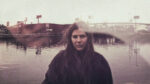
Photo by Alex de Mora