/
Talk
Che Pope
September 14, 2016
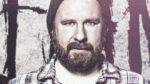
Meet one of the most prolific, pensive and positronic producers in the United States of America: Che. He's worked with Dre, he's worked with Aretha Franklin, he works with Hans Zimmer. He has produced Eminem, Jay Z and Lauryn Hill. He's a damn fine producer.

Did you always know, from an early age, that you wanted to have a career in the music business?
No. I just did music for fun. I was actually a Finance major in college, I just got better and better at doing music.
What was the pivot that made you change course from finance to music?
Well, I got offered a deal from Teddy Riley, famous producer back in the '90:s. A really huge producer, very influential, especially in the urban community. New jack swing, that was his whole sound.
We're talking about Bobby Brown, New Edition, Michael Jackson, Guy, Blackstreet. All that stuff was Teddy Riley. His discography is probably one the most massive discographies of anybody. He's launched more careers than anybody. The Neptunes (Pharrell Williams and Chad Hugo) came through Teddy Riley. All sorts of artists came through Teddy Riley.
My first deal was with Teddy Riley, and that was that moment.
Cool. What was your first major production?
To All the Girls on Wyclef Jean's album The Carnival (1997). That was my first independent production. I've done additional productions and co-productions on other things before that, but my first independent production was Wyclef's Carnival album.
Do you remember who introduced you to the Elektron instruments?
I know a lot of different producers, and I deal with a lot of equipment. I also know a lot of composers. People always tell me about new things, about this and that, so I don't remember for sure.
But I'm a little bit of a gear head, so a little bit more specifically, in working on it in detail, although he wasn't the one who introduced me to it, I remember the one who showed me around was Alex, the German producer also known as Boys Noize (featured in this Talk).
Which ones do you own?
Analog Keys, Octatrack and Rytm are the ones I have in my studio.
What roles do they have in your productions?
Everything is just paint. I use them as an artist uses the paint on a palette. To be honest with you, I use a lot of different things.
Sometimes I start with a kick drum. Sometimes I start with a melody. Some days I make that sound on a Moog. Some days I program that sound on an Analog Rytm.
Can you tell me some of the projects you're currently working on?
Oh, where do I start! I'm working on a new artist named 070 Sheik, the new Pusha T album, the new GOOD Music album, I'm working with a new Universal Republic artist called JMR, I work with Ruby Rose, Christina Aguilera, oh man, it's so much. I'm working with an artist on Fool's Gold named Leaf. There's more, but that's probably enough for now!
Please give me — and all the other Elektronauts — a piece of advice on how to get some variety and originality into a beat!
Where you draw inspiration from. One of the things I do, obviously, running a record label, I do a lot of A&R as well, so I get to hear a lot of music from producers, a lot of young producers. I hear a lot of repetition. Just because you're inspired by something, it doesn't mean you have to emulate that. You still have to carve out your own name and your own style in order to find your individuality.
It's definitely about finding your own voice and your own individuality, and striving to do your own thing, even if you draw inspiration from somewhere. It's about originality and exploration. There's a usually a lot more freedom and exploration in obscure music and independent music than I find in my mainstream music, if you will.
Your productions are sometimes layered and complex, sometimes exquisitely simple and elemental, like the marching snares heard in Eminem's Like Toy Soldiers. How do you decide when to be massive, and when to be minimal?
With certain producers, like Alex da Kid, it can be somewhat massive and a lot going on, whereas with others, like Drake and those guys, it's much more minimal, that's their style. I personally think it's the artist that decides. What is this artist looking for? At the end of the day, you're hired to help the artist's vision come to life, and be true to it.
A lot of times it's the artist that sets the direction I go with the song. And, obviously, what the song calls for. Sometimes the song sets the direction, based on the song and the melody, if it needs a build, if it needs a lot going on, if it needs to be simple and minimal. There's a lot of trial and error involved, too. There is no right way, but there's definitely a wrong way!
Being a good listener is an important quality?
Yeah. I'm looking for that custom fit. You know, you can get a suit on right, or you can have a terrible fit. It's that sort of mind-set.
You work with Hollywood composer Hans Zimmer. Do you know if he owns or uses Elektrons at all?
I'm sure he has. He's another gear-head, so he's very astute with new products. I'm sure there's quite a few Elektron products within the organization. There's quite a few composers that work down there, and I'm sure I've seen lots of them in the various composer's rooms.
There's this ancient idea of a Ghost in the machine. Do you believe a piece of technology can have a soul?
I do. That's my own personal belief. Whether it's technology or not. If you're using an acoustic guitar, which a lot of people would say has a soul, has a feeling, has a sound, same with an electronic machine, you know. Depending on how you use it. You use it in a certain way, manipulate it a certain way. It can push you in certain directions, by the functionality, by the sounds. I truly believe that.
Is there any particular musical genre you think the Elektrons are especially suited for?
Obviously, the early adopters were the EDM guys, but I think that you're only limited by your creativity. I think more people in urban music should use it, I think people in other genres should use it. The awareness factor is important, that more people are aware of it. Oftentimes, when I'm showing it to people, they're seeing it for the first time. I definitely think it could easily work in multiple arenas.
To me, music is merging, too, you'll hear elements of this thing and this type of music and that. I don't think there's one sound anymore, there's hybrids. As it should be!
Speaking of hybrids, to my ear, your productions sometimes feature a combination of drum machine and live drums, I'm thinking about some of the songs on the Miseducation of Lauryn Hill album, for example?
I do both, but even when I use live drums I tend to manipulate them through the machines. I'll have a drummer come in, I'll record him, I'll sample him, I'll chop him, I'll edit him. With me, some way or another it always ends up in the machines, even when I use live musicians!
Do you believe rhythm is a more fundamental quality than melody?
No, I wouldn't say that. I don't agree with that.
To be honest, you're awesome at both rhythm, melody, and the turbulence between them. Your production of Bound 2 is just the most beautiful collage of soul loops and hard synth drones. It's very distinct, while still keeping Kanye's lyrics front and center. Do you recall what inspired you to do it the way you did?
Why, thank you. I needed some kind of texture for Yeezus (2013), I felt like at one point it needed some kind of warm release. That was the juxtaposition of those. Yeezus was so abrasive, I felt that Bound could be the release, and I put some elements in there as well that weren't as foreign to the project. Some elements of cohesion in there, which all could be used as a release.
Working with Dr. Dre and Eminem on the Aftermath project must have been a pretty awesome experience.
That was the first time I saw such a high level of perfectionism. I had never encountered it to such an extent before I started to work on a project with Dre. He's the most intense perfectionist I've ever met.
Any more collaborations between you guys in the future?
Well, me and Dre are friends, so we'll see!
This is a question I've always wanted to ask a Hollywood producer (although perhaps some light was shed by Dustin Hoffman's Wag the Dog character). What does a producer do?
I would give two definitions. There is the traditional producer's role, and then there's the modern-day producer. I talk about this in my lectures. Traditionally, the A&R on the record label would find songs for an artist, then the producer would produce those songs. The producer's role was to see the songs through from demo to finished product.
The modern-day producer — you have a lot of people who are misusing the term, you have songwriters that call themselves producers, you have producers that call themselves songwriters, and then you have people that are both songwriters and producers — the role of the producer gets a little distorted in the modern sense. One of the main things I see a producer does is finish a song. Bring the song home, from whatever the demo was. I see a producer doing that. From idea through conception to finished record. That's still my definition of a producer.
You've been working on an astonishing number of productions together with Hans Zimmer. I read the figure 150 motion picture scores, is it that many?
I would say it's probably more than that. Music, additional music themes and musical contributions for over 250 films, television shows and commercials is probably more accurate.
What is the most memorable motion picture score you've worked on, so far?
For me, it's always going to be a movie called Whiteboyz (directed by Marc Levin, 1999), because that was a movie I scored solely. It was a big step for me, coming from the music industry. The other stuff I might have contributed a theme or additional music and so on and so forth. With Hans, I did contributions, you know, for all kinds of blockbuster movies.
The first one for me was great, because I was a fish out of water. There was some trepidation, and obviously some fear, but I was proud of myself for taking on the challenge and overcoming the fear. Taking that step has been great for my career ever since. I do all kinds of things now. I just gave a lecture at a tech convention in Lithuania. I gave a speech to 4000 people. It takes not having the fear of flying, so to speak!
Can you share some of your own musical favorites?
It changes, but I would say, when I started out, there was a hip hop producer named DJ Karriem. He was very influential on me. Curtis Mayfield was a huge influence on me when I discovered him. I had already discovered him before, but I also discovered that he was a producer and a songwriter, composer and arranger, I really learned how prolific he was and how amazing he was. Prince was another huge inspiration of mine. One of my cousins, who's about three years older than me, was a massive Prince fan. He introduced me to Prince when I was ten years old or something, and he's been a lifelong inspiration for me since then. Then there's also Led Zeppelin, they are amazing.
I grew up in Boston, the good thing about it was that you learned about all types of music. In my home, there was a lot of, I would say, soul music, there was Earth, Wind & Fire and things of that nature, but in my community in Boston I also learned a lot about rock, Led Zeppelin, The Beatles, and so on and so forth. I also grew up with punk. You know, punk and hip hop, punk came along as a sort of post-disco phenomenon, when disco sort of faded out. I had all these influences, all these different genres I was aware of, which I think helped me. Especially since it gave me a wider palette of music than most people.
If you had to choose only one album to bring to a desert island, which one would it be?
I probably couldn't do that. I have too many. It depends on which day you ask me, but right now it'd be Prince's Sign o' the Times. It could be Curtis Mayfield's Super Fly one day, it could be Dr. Dre's The Chronic another day. I really listen to albums, you know. I'm not really doing the playlist thing. I usually just dive into one album, when I listen to music.
Are you classically trained?
I have some background in musical training, but I wouldn't call myself a trained musician. I read music, but I'd say I read music rather slowly. Still, I can read sheet music and play from what I see. I have some fundamental understanding of scales and things of that nature, a little music theory. I try not to lock myself into theory or focus on chord progressions, you know what I mean? I tend to think, right now, that I have a core vocabulary. Other than that, I just like to be free and just see what happens.
I haven't done any formal training in about 20 years, but it's funny that you ask that question because I'm actually going back into doing some formal training. In sort of a tribute to Prince, in my own way. Since the passing of Prince, I decided that I really want to learn how to play the guitar. I play guitar, but I mean really learn how to play! The other things I want to study are harmony and orchestration. I think, working with people like Hans, I have a deeper understanding of harmony and orchestration than the average producer, for sure, but I want an even deeper understanding.
Please share a perfect, magical moment you've experienced during your musical career!
Oh man, there has been quite a few. Meeting Joni Mitchell in my studio, then conversing with her all evening at Prince's house at one of his parties, working with Aretha Franklin early in my career, or working with Maurice White from Earth, Wind & Fire early in my career.
Even nowadays, working with Christina Aguilera is always a great feeling, she's such a beautiful soul, always searching for new inspiration. Man, there are so many moments, like spending time with Jay Z at his house, just talking about life. Being with Biggie on a boat in Miami. I've had so many magical moments. I'm blessed in that regard. Sipping red wine with Hans Zimmer at four in the morning!
Interview by Daniel Sterner
Photo by Dan Wilson